Understanding exactly what equipment makes up an oil filter production line is essential for manufacturers, procurement engineers, and factory planners who are evaluating whether to invest in or upgrade their filtration manufacturing capacity. An oil filter production line is not a single machine but rather a coordinated assembly of specialized equipment, each performing a distinct role in transforming raw materials into finished, functional oil filter products. Knowing which machines are involved helps decision-makers allocate budgets accurately, plan factory floor layouts, and ensure seamless production continuity from start to finish.
The complexity of an oil filter production line varies depending on the type of filter being manufactured — whether cartridge-type, spin-on, panel, or canister format — but the fundamental production stages remain consistent across most configurations. This article provides a comprehensive breakdown of every major equipment category typically found in a professional oil filter production line, explaining the function, importance, and integration of each machine within the overall workflow. Whether you are building a new facility or auditing an existing one, this guide will give you a clear and actionable picture of what the full line looks like.
Raw Material Preparation Equipment
Filter Media Cutting and Slitting Machines
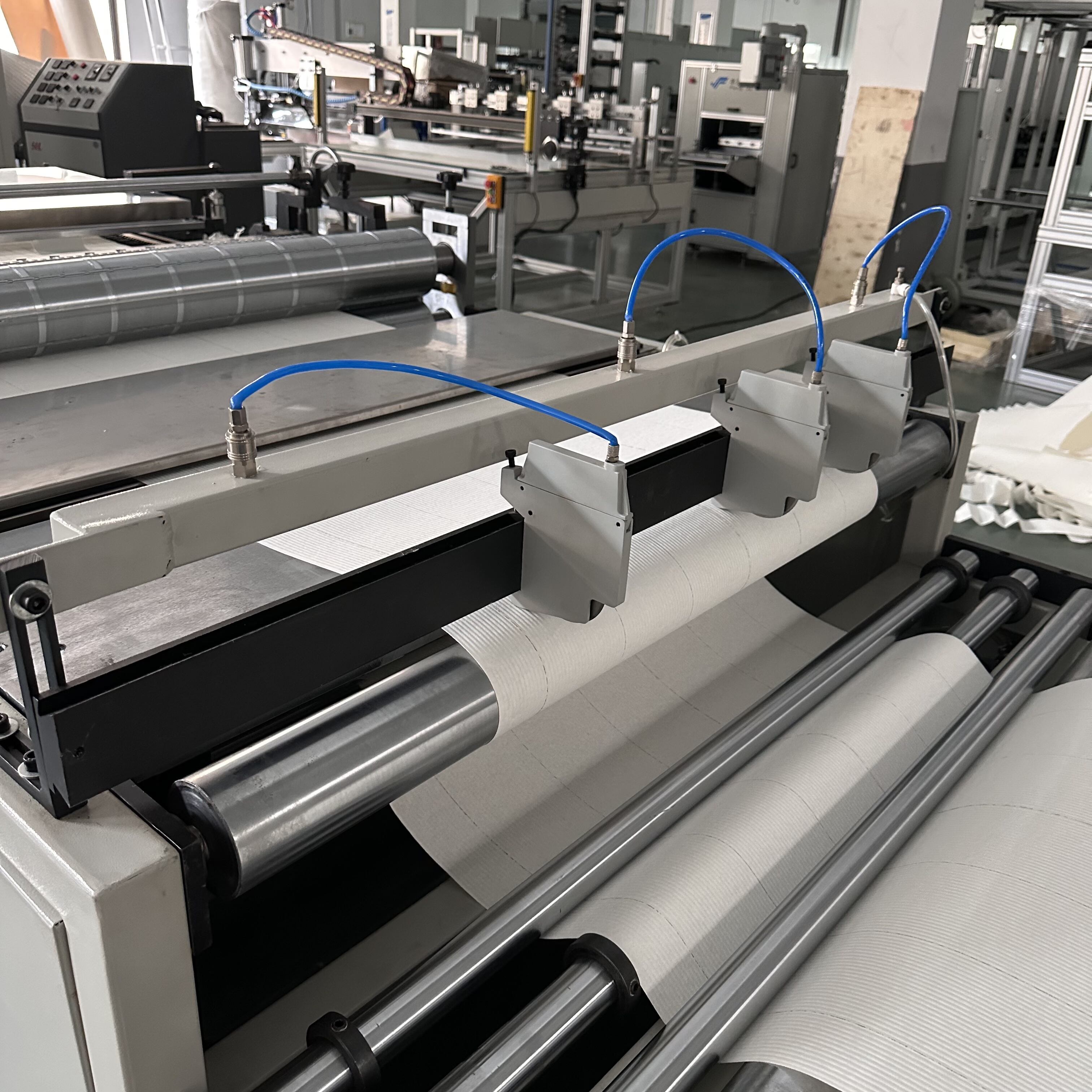
The oil filter production line begins with raw material handling, and the most critical input material is the filter media itself — typically a cellulose, synthetic, or glass-fiber paper. Before any forming process can begin, this material must be cut and slit to the precise width and length specifications required for the filter element geometry. Cutting and slitting machines are precision instruments that unroll large reels of filter media and slice them into workable strips with minimal edge deformation.
Accuracy at this stage directly determines the quality of the pleated element downstream. Inconsistent widths will result in pleating failures, seam leaks, or dimensional non-conformance in the final filter body. High-quality cutting machines on an oil filter production line typically feature servo-driven feed systems, digital measurement displays, and auto-tension controls to maintain consistent material handling across extended production runs.
Many modern oil filter production lines integrate slitting machines with automatic roll-change systems to reduce downtime during material transitions. This is particularly valuable in high-volume environments where production speeds demand uninterrupted media supply. The choice of blade geometry — rotary vs. straight-edge — also affects the edge quality and is selected based on the specific media type being processed.
Adhesive and Sealant Preparation Units
Alongside the filter media, adhesives and sealants play a critical structural role in assembling oil filters. Preparation units for hot-melt adhesives, epoxy compounds, or polyurethane sealants are typically stationed at the beginning of the oil filter production line to ensure materials are ready at the correct viscosity and temperature when needed further down the line.
These units include heated tanks, mixing systems, and temperature-controlled delivery lines that feed adhesive directly into application stations. Precise temperature management is critical here because adhesive performance is highly sensitive to thermal conditions — too cold and the material will not bond effectively; too hot and it may degrade or create inconsistent bead patterns on the filter components.
Proper integration of adhesive preparation units within the oil filter production line ensures that gluing, sealing, and end-cap bonding operations downstream receive consistent material supply without manual intervention, contributing to both quality consistency and labor efficiency across the production floor.
Filter Element Forming Equipment
Pleating Machines
The pleating machine is arguably the most recognizable and technically sophisticated piece of equipment in any oil filter production line. Its job is to fold the flat filter media into the accordion-like pleat structure that dramatically increases the effective filtration surface area within a compact filter body. Pleat geometry — including pleat height, pleat count, and pleat density — is programmed into the machine and must be held within tight tolerances throughout the run.
Modern pleating machines on an oil filter production line operate at high speeds while maintaining precise pleat geometry through servo-controlled folding mechanisms, heated platens for shape setting, and real-time monitoring systems that detect pleat irregularities. Some models incorporate automatic pleat counting and length measurement to ensure each pleated segment is cut at the correct length before moving to the next stage.
The pleating machine output feeds directly into the element rolling or forming station, making it a bottleneck point for the entire oil filter production line. Any instability in this machine — such as inconsistent pleat depth or off-spec pleat height — will cascade into defects in every downstream assembly step. This is why pleating machines are typically subject to the strictest preventive maintenance schedules in the facility.
Element Rolling and Forming Machines
After pleating, the flat pleated strip must be formed into a cylindrical or conical shape depending on the oil filter design. Rolling and forming machines handle this transformation, curling the pleated media around a mandrel or forming tool to create the filter element core. The ends of the rolled element are precisely trimmed to ensure clean contact surfaces for subsequent end-cap bonding.
In an oil filter production line handling spin-on filter elements, the formed cylinder is reinforced with a perforated inner support tube that provides structural integrity under operating pressures. Machines for inserting and bonding the inner tube are typically integrated at this station, combining element forming and reinforcement into a single automated step to minimize handling and maintain dimensional accuracy.
The quality of the rolling and forming process determines the final element's concentricity and roundness, both of which affect how cleanly the element seats within the outer filter housing. Tight dimensional control at this stage of the oil filter production line is essential to prevent bypass leakage in the assembled filter product during service.
End-Cap and Housing Assembly Equipment
End-Cap Bonding and Curing Machines
End caps are the structural end closures that seal the top and bottom of the cylindrical filter element, and bonding them securely to the media is one of the most critical assembly steps in the entire oil filter production line. End-cap bonding machines apply precise quantities of adhesive or plastisol compound to the end-cap surface, then press the filter element into contact with the end cap under controlled pressure and temperature to form a leak-proof seal.
Curing is the next sub-step, and it is handled either inline through heated conveyor tunnels or in batch ovens staged alongside the oil filter production line. The curing profile — temperature, dwell time, and cooling rate — must be carefully validated for the specific adhesive system in use. Under-cured bonds are a leading cause of field failures where end caps separate under thermal or pressure cycling during engine operation.
Advanced oil filter production lines use automated dispensing robots for adhesive application at the end-cap station, ensuring consistent bead geometry and volume regardless of operator variability. Vision systems are sometimes incorporated at the outfeed of the curing station to inspect bond quality before the element moves into housing assembly.
Housing Forming and Seaming Machines
The outer metal housing of a spin-on oil filter is typically manufactured from steel sheet that is drawn, formed, and seamed around the filter element. Drawing presses and can-seaming machines are standard inclusions in a complete oil filter production line, shaping flat blanks into cylindrical shells with precise diameter and depth, then mechanically seaming the base end-cap to close the housing around the internal element assembly.
Seaming quality is a critical safety parameter — a failed seam under system oil pressure can result in catastrophic filter rupture. Seaming machines on the oil filter production line use multi-stage seaming rolls to progressively fold and compress the seam, achieving the interlocking geometry required by design standards. After seaming, the joint is typically tested for integrity using pressure or vacuum leak-check equipment stationed directly on the line.
For cartridge-type filters without metal housings, this equipment is replaced by overmolding or housing insertion stations that fit the formed filter element into plastic or composite housings. The specific equipment configuration in this section of the oil filter production line is therefore highly dependent on the product design being manufactured.
Testing, Inspection, and Quality Control Equipment
Leak Detection and Pressure Test Stations
Every completed filter unit on an oil filter production line must pass a leak integrity test before it is approved for downstream labeling and packaging. Leak detection stations use pressurized air or inert gas to pressurize the filter to a defined test pressure while monitoring for pressure decay or bubble formation at seam joints, end-cap bonds, and center tube connections. These stations can be manual, semi-automatic, or fully automated inline testers depending on the line's throughput requirements.
Pressure testing equipment on an oil filter production line is calibrated to detect very small leaks that might otherwise go unnoticed through visual inspection. Automated testers can reject non-conforming filters directly on the conveyor without human intervention, maintaining production pace while ensuring that every unit shipped meets the required leak integrity specification. Test result data is often logged digitally for traceability and statistical process control purposes.
Some oil filter production lines also include differential pressure flow testers that measure the filter's flow resistance at a specified flow rate. This test verifies that the pleated element was assembled correctly and that no media damage or excess adhesive intrusion has restricted the media's filtration surface beyond acceptable limits. Both tests together provide a comprehensive quality gate for the assembled filter before it exits the production line.
Marking, Labeling, and Coding Machines
After passing quality inspection, finished filters move to the marking and labeling station of the oil filter production line. Inkjet printers, laser coders, or label applicators apply batch codes, production dates, part numbers, and compliance markings to each unit. Accurate and legible marking is increasingly important for aftermarket traceability requirements and regulatory compliance in major markets.
High-speed labeling machines used in oil filter production lines can apply pressure-sensitive labels to cylindrical surfaces with wrap-around accuracy, handling multiple label formats and sizes through quick-change tooling systems. Vision inspection cameras are often positioned after the labeling station to verify that each label has been applied correctly, is fully adhered, and displays legible text and barcodes before the unit enters the final packaging stage.
The integration of serialized coding at this stage of the oil filter production line also enables manufacturers to track individual units through the supply chain, supporting recall management capabilities and warranty validation processes. As regulatory and quality standards in the filtration industry continue to evolve, the marking and inspection station has grown from a peripheral step to a core quality function within the production line architecture.
Packaging and Palletizing Equipment
Individual Packaging Machines
The final operational stage of an oil filter production line is packaging, where finished and inspected filters are wrapped, boxed, and prepared for distribution. Individual packaging machines insert filters into printed cartons or poly bags, fold and seal the packaging, and discharge completed units onto a case-packing conveyor. The speed and format flexibility of these machines must match the line's overall throughput to prevent upstream bottlenecks.
Cartoning machines on an oil filter production line are typically servo-driven to allow rapid changeover between different filter sizes and carton formats. When a production run switches from one filter model to another, the packaging machine should ideally be reconfigurable within minutes rather than hours to minimize downtime between product transitions. Auto-loading systems that orient and insert filters into cartons without manual handling are common in higher-volume operations.
Case Packing and Palletizing Systems
Once individually packaged, filters are grouped into shipping cases by automated case erectors, case packers, and case sealers that are integrated at the outfeed of the oil filter production line. These machines erect flat-packed cardboard blanks, fill them with the correct count of individually boxed filters, and seal the top and bottom flaps with tape or hot-melt adhesive before conveying the completed cases to the palletizing station.
Palletizing robots or conventional layer palletizers stack completed cases onto shipping pallets in optimized patterns for transport stability and storage efficiency. An automatic pallet wrapper applies stretch film to secure the load for logistics handling. Together, these downstream packaging systems complete the oil filter production line from raw material input to pallet-ready finished goods, enabling efficient dispatch to warehouses or distribution centers.
FAQ
How many machines are typically in a complete oil filter production line?
A full oil filter production line typically consists of ten to twenty individual machines or stations, depending on the degree of automation, the filter type being produced, and the level of in-line testing and inspection required. Smaller semi-automatic lines may combine some functions into multi-purpose stations, while high-volume automated lines will have dedicated equipment at every process step including quality control and packaging.
Can an oil filter production line be customized for different filter types?
Yes, an oil filter production line can be configured and customized to accommodate different filter formats such as spin-on, cartridge, panel, or canister designs. The core processes of media preparation, pleating, element forming, and end-cap bonding are common across most types, but the specific machine configurations at the housing assembly and packaging stages will differ based on the target product design and production volume requirements.
What is the most critical piece of equipment in an oil filter production line?
The pleating machine is often considered the most critical piece of equipment in an oil filter production line because pleat geometry directly determines filtration efficiency, element structural integrity, and flow resistance. Any instability or drift in the pleating process will introduce defects that propagate through every subsequent assembly and testing stage, making consistent pleating performance the single largest driver of overall line quality and yield.
How is quality control integrated into an oil filter production line?
Quality control in an oil filter production line is typically integrated at multiple points rather than being limited to a single final inspection station. Inline checks occur at the pleating stage for geometric accuracy, at the end-cap bonding stage for adhesive integrity, and at dedicated leak test and pressure test stations after final assembly. Vision systems and automated reject mechanisms ensure non-conforming units are removed from the line in real time without interrupting production flow.