Running a high-performance oil filter production line requires more than simply assembling the right machinery. It demands a strategic approach to workflow design, equipment integration, quality assurance, and continuous process optimization. Manufacturers operating in competitive markets face constant pressure to increase throughput, reduce waste, and maintain consistent product quality — all while keeping operational costs under control. Understanding how to systematically improve efficiency is therefore not a luxury but a business necessity for anyone managing or investing in an oil filter production line.
This article explores proven methods and operational strategies that engineers, production managers, and factory owners can apply to elevate the performance of their oil filter production line. From layout optimization and automation integration to preventive maintenance and quality control protocols, each improvement area is examined with practical depth. Whether you are retrofitting an existing facility or designing a new one from scratch, the principles discussed here provide actionable guidance to help you get more output, fewer defects, and better returns from every production shift.
Understanding the Core Bottlenecks in an Oil Filter Production Line
Identifying Flow Disruptions and Downtime Triggers
Before any meaningful efficiency improvement can be achieved, production managers must conduct a thorough audit of the existing oil filter production line to identify where bottlenecks and flow disruptions originate. Common culprits include mismatched station speeds, unplanned machine downtime, and inconsistent material feeding. When one station operates significantly slower than the rest, the entire line suffers from queue buildup, idle time, and reduced throughput — even if all other equipment is technically capable of higher performance.
Downtime analysis is a critical first step. Tracking machine stoppages by cause — whether mechanical failure, tooling changeover, operator error, or material shortage — gives managers quantifiable data to prioritize their improvement investments. In many oil filter production line environments, unplanned mechanical failures account for 20 to 40 percent of total lost production time. Addressing these root causes methodically rather than reactively is what separates consistently efficient operations from chronically underperforming ones.
It is also worth examining how production orders flow through the line. If batch sizes are poorly matched to line capacity, or if scheduling creates frequent start-stop cycles, the cumulative efficiency loss can be substantial. A well-structured production schedule aligned with actual equipment cycle times is one of the lowest-cost ways to improve the output of any oil filter production line without capital expenditure.
Material Handling and Feed Consistency
The efficiency of an oil filter production line is heavily influenced by how raw materials and components are delivered to each workstation. Irregular material feeding — whether caused by inconsistent supplier quality, poor storage conditions, or inadequate in-line buffering — introduces variability that ripples through the entire process. Filter media, end caps, cores, and sealing components must arrive at each station in the correct orientation, quantity, and condition to prevent interruptions.
Automated feeding systems, vibratory bowl feeders, and in-line sensors can significantly reduce manual intervention and feeding errors. When these systems are calibrated to match the cycle time of adjacent stations, the oil filter production line achieves a smoother, more consistent flow. Even simple improvements like standardizing component packaging or adding buffer conveyors between stations can reduce idle time caused by material shortages or misfeeds.
Procurement teams play an equally important role. Partnering with suppliers who deliver consistent material specifications reduces the frequency of in-process adjustments and inspection holds. When material quality is predictable, the production line can sustain higher speeds with fewer interruptions — directly improving overall equipment effectiveness (OEE) scores across the oil filter production line.
Optimizing Machine Layout and Workflow Design
Line Balancing for Maximum Throughput
Line balancing is one of the most impactful engineering strategies available to improve the efficiency of an oil filter production line. The goal is to distribute workload evenly across all stations so that each station operates at approximately the same cycle time, minimizing waiting time and reducing the risk of one station overwhelming another. An imbalanced line creates idle capacity at some stations and chronic overload at others — a pattern that limits overall throughput no matter how fast individual machines run.
To balance a line effectively, engineers must measure the cycle time of every station under realistic production conditions, then reorganize or re-engineer tasks to achieve uniform pacing. This may involve splitting a slow station into two parallel operations, adding a secondary machine at a bottleneck position, or redistributing minor assembly tasks between adjacent stations. For manufacturers running multiple filter model variants on the same oil filter production line, modular workstation designs allow faster reconfiguration when switching between product types.
The physical layout of the line also matters. A linear flow reduces material handling distances and simplifies supervision. U-shaped or cell-based layouts can be advantageous for smaller operations where cross-trained operators need to cover multiple stations. Regardless of layout type, the objective is always the same: ensure that every meter of the oil filter production line contributes to productive output rather than creating delay.
Ergonomics and Operator Efficiency
Operators are an integral part of most oil filter production line environments, even in highly automated facilities. Poorly designed workstations force operators into awkward postures, increase fatigue, and slow down repetitive manual tasks. Over a full production shift, these ergonomic inefficiencies can reduce individual operator output by 10 to 20 percent and increase error rates significantly. Investing in ergonomic workstation design is therefore both a productivity and quality improvement.
Adjustable work surface heights, correctly positioned tool holders, and optimized part presentation angles reduce the physical strain of repetitive tasks. Clear visual cues, intuitive control interfaces, and well-organized tool kits further reduce the cognitive load on operators. When people can work comfortably and confidently, the overall rhythm of the oil filter production line becomes more stable and predictable.
Training is equally important. Operators who thoroughly understand the function and setup of their station are faster, more consistent, and better at spotting early signs of quality deviation. Regular cross-training across multiple stations also improves flexibility, allowing supervisors to rebalance the workforce quickly when absenteeism or surges in demand affect the oil filter production line.
Integrating Automation and Smart Monitoring Technologies
Selective Automation for High-Impact Stations
Full automation of an oil filter production line is not always the most practical or cost-effective path, particularly for small-to-medium manufacturers or those producing a diverse range of filter models. A more strategic approach is selective automation — identifying the two or three stations where automation delivers the highest return on investment and implementing it there first. Typically, these are the stations with the highest cycle frequency, the greatest defect risk, or the most demanding physical requirements for operators.
Automated seam welding, robotic end-cap assembly, and machine-vision inspection systems are among the most commonly adopted automation upgrades on a modern oil filter production line. These technologies not only increase speed and precision but also generate consistent quality that is difficult to replicate through manual labor over extended production runs. The return on investment is often measurable within the first 12 to 18 months when replacing genuinely labor-intensive or error-prone manual processes.
When evaluating automation investments, manufacturers should consider not just equipment cost but also integration complexity, changeover flexibility, and maintenance requirements. Automation that is difficult to retool when product specifications change can actually reduce overall efficiency by creating new bottlenecks during model transitions. The best automation solutions for an oil filter production line are those that improve speed and quality while maintaining the operational flexibility the business needs.
Real-Time Monitoring and Data-Driven Decisions
Modern manufacturing intelligence systems give production managers unprecedented visibility into every aspect of the oil filter production line. By connecting machines, sensors, and quality inspection stations to a centralized data platform, managers can track OEE metrics in real time, receive instant alerts for deviations, and analyze historical trends to predict and prevent future failures. This shift from reactive to proactive management is one of the most powerful levers available for improving production efficiency.
Key performance indicators to monitor include machine uptime percentage, first-pass yield rate, cycle time per station, defect rate by type, and changeover time. When these metrics are visible in real time on a shop floor dashboard, supervisors can make immediate corrections rather than discovering problems at the end of a shift. For the oil filter production line, even a one percent improvement in first-pass yield translates directly into reduced rework cost and higher effective output per hour.
Predictive maintenance is another major benefit of smart monitoring. By analyzing vibration patterns, temperature trends, and operational cycle counts, maintenance systems can predict when a critical component is approaching failure — allowing planned replacement during scheduled downtime rather than an unexpected breakdown. This approach dramatically reduces the mean time between failures on critical stations of the oil filter production line, keeping overall availability consistently high.
Enhancing Quality Control to Reduce Waste and Rework
Building Quality Into the Process, Not Just Inspecting It Out
One of the most costly efficiency drains on any oil filter production line is the cost of defects — not just the material waste, but the rework labor, the inspection time, the delayed shipments, and the potential for customer complaints. Traditional end-of-line quality inspection catches defects too late; by that point, multiple production cycles of faulty product have already been completed. A more efficient approach is to build quality control checkpoints directly into the production process at each critical stage.
In-process inspection methods such as vision systems for dimensional verification, pressure testing for filter integrity, and automated torque monitoring for assembly fasteners allow defects to be caught and corrected at the point of origin. This prevents non-conforming parts from being passed forward to downstream stations, reducing both material waste and downstream rework. For managers running a high-volume oil filter production line, in-process quality controls provide a measurable reduction in total cost of quality.
Statistical process control (SPC) tools add another layer of intelligence. By tracking key quality parameters over time and applying control chart analysis, quality engineers can identify when a process is drifting toward out-of-spec conditions before defects actually occur. This enables corrective action to be taken proactively, keeping the oil filter production line operating within specification limits and minimizing the frequency of quality holds or line stoppages.
Changeover Reduction and Flexible Production Scheduling
In facilities that produce multiple filter specifications on the same oil filter production line, changeover time is a significant source of efficiency loss. Every hour spent reconfiguring tooling, adjusting machine parameters, and verifying quality after a model switch is an hour of productive output lost. Applying principles from quick-changeover methodologies — such as pre-staging changeover tools, converting internal setup tasks to external ones, and standardizing fixturing across model families — can reduce changeover time by 30 to 60 percent in many production environments.
Scheduling discipline also plays a role. Grouping production runs of similar filter sizes or specifications together reduces the frequency and complexity of changeovers. When the sequence of production orders is designed to minimize the total adjustment required between runs, the oil filter production line spends more time producing and less time transitioning. This is especially relevant for operations serving diverse customer specifications where frequent model changes are unavoidable.
Documenting changeover procedures in clear, step-by-step visual formats and training operators thoroughly on each procedure ensures that changeovers are executed correctly and consistently every time. Variability in how operators perform changeovers introduces risk of setup errors and subsequent quality failures — both of which reduce the effective efficiency of the oil filter production line. Standardized procedures, well-trained people, and optimized scheduling work together to keep transition losses to a minimum.
Preventive Maintenance and Long-Term Equipment Performance
Scheduled Maintenance as a Production Strategy
Preventive maintenance is not simply a technical obligation — it is a core production strategy for any manufacturer relying on a high-output oil filter production line. Machines that are well-maintained operate more consistently, hold tighter tolerances, consume less energy, and require fewer emergency repairs. Scheduling regular maintenance intervals based on manufacturer recommendations and actual operating hours ensures that equipment remains in peak condition rather than degrading gradually to the point of failure.
A robust preventive maintenance program for an oil filter production line typically includes lubrication of moving components, inspection and replacement of wear parts, calibration of sensors and measurement systems, and cleaning of critical assemblies. When these tasks are completed on schedule, the probability of unplanned downtime drops significantly. Equally important is maintaining accurate maintenance records that allow trends to be identified — such as a particular component failing earlier than expected — which signals the need to revise the maintenance interval or investigate a root cause.
Maintenance windows should be planned in advance and integrated into the production schedule rather than treated as interruptions to it. By building maintenance time into the weekly or monthly production plan, managers can ensure that downtime happens on their terms rather than the machine's. This level of planning discipline is what allows world-class manufacturers to sustain high availability rates across their oil filter production line year after year.
Spare Parts Management and Response Time Reduction
Even the best-maintained oil filter production line will occasionally experience unexpected component failures. The speed with which production can be restored after such events depends directly on the availability of critical spare parts. Maintaining a well-organized, properly stocked spare parts inventory is therefore an essential element of overall line efficiency. When a critical spare is not available and must be sourced from a supplier, the resulting delay can cost many times more than the part itself.
Identifying the critical spares for each station — those whose failure would stop the line entirely — and maintaining a minimum stock level for each is standard practice in efficient manufacturing operations. For less critical components with longer lead times, safety stock calculations based on historical failure frequency can guide inventory levels. A good spare parts strategy balances the cost of holding inventory against the cost of production downtime on the oil filter production line.
Response time is also a function of how quickly maintenance technicians can diagnose and address a problem. Clear machine documentation, accessible service points, and well-trained maintenance staff all contribute to faster mean time to repair. Investing in technician training and in the tools needed to work efficiently on line equipment pays dividends every time a breakdown is resolved in minutes rather than hours.
FAQ
What is the most impactful first step to improve efficiency on an oil filter production line?
The most impactful first step is conducting a thorough bottleneck analysis of the existing oil filter production line. By measuring cycle times at every station, tracking downtime causes, and identifying where queue buildup or idle time occurs most frequently, production managers gain the data needed to prioritize improvements. This analysis prevents costly investments in the wrong area and ensures that every improvement effort addresses the highest-impact constraint first.
How does automation improve the efficiency of an oil filter production line?
Automation improves efficiency by increasing station speed, reducing human error, and delivering consistent quality across high-volume production runs. On an oil filter production line, targeted automation at high-frequency assembly stations, welding operations, or inspection points can increase throughput significantly while reducing labor costs and defect rates. The key is selecting automation solutions that integrate cleanly with the rest of the line and maintain flexibility for product changeovers.
How often should preventive maintenance be scheduled for oil filter production line equipment?
Preventive maintenance frequency should be based on manufacturer recommendations, actual machine operating hours, and historical failure data for each piece of equipment on the oil filter production line. High-speed or high-wear stations typically require more frequent maintenance intervals than lower-cycle stations. Building maintenance windows directly into the production schedule — rather than treating them as unplanned interruptions — ensures that equipment remains reliable and that maintenance activities do not compete with production targets.
Can a cartridge circulation line improve the overall performance of an oil filter production line?
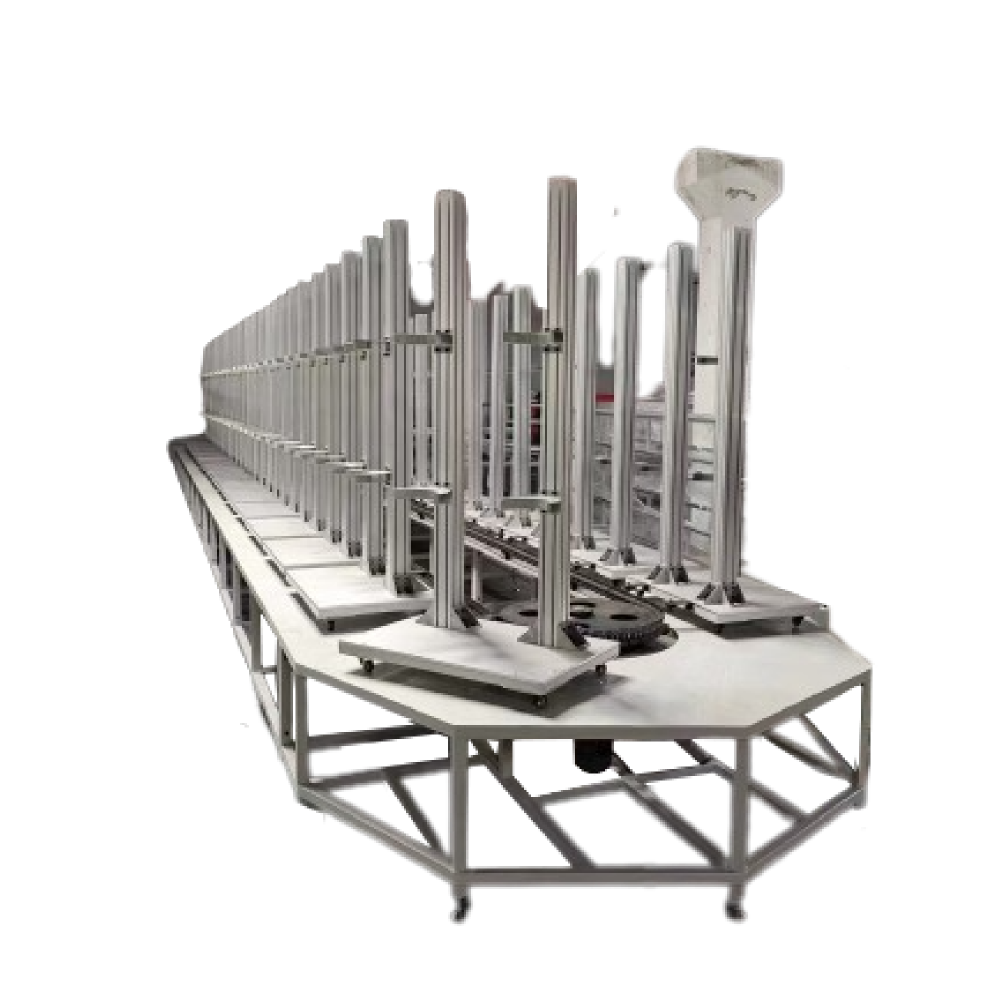
Yes, integrating a oil filter production line with an efficient cartridge circulation system can meaningfully improve throughput and reduce material waste. Cartridge circulation lines are designed to streamline the movement and processing of filter cartridges through production, reducing handling time and ensuring consistent quality at each stage. When properly integrated, they contribute to a smoother, faster, and more eco-friendly overall production process.
Table of Contents
- Understanding the Core Bottlenecks in an Oil Filter Production Line
- Optimizing Machine Layout and Workflow Design
- Integrating Automation and Smart Monitoring Technologies
- Enhancing Quality Control to Reduce Waste and Rework
- Preventive Maintenance and Long-Term Equipment Performance
-
FAQ
- What is the most impactful first step to improve efficiency on an oil filter production line?
- How does automation improve the efficiency of an oil filter production line?
- How often should preventive maintenance be scheduled for oil filter production line equipment?
- Can a cartridge circulation line improve the overall performance of an oil filter production line?