
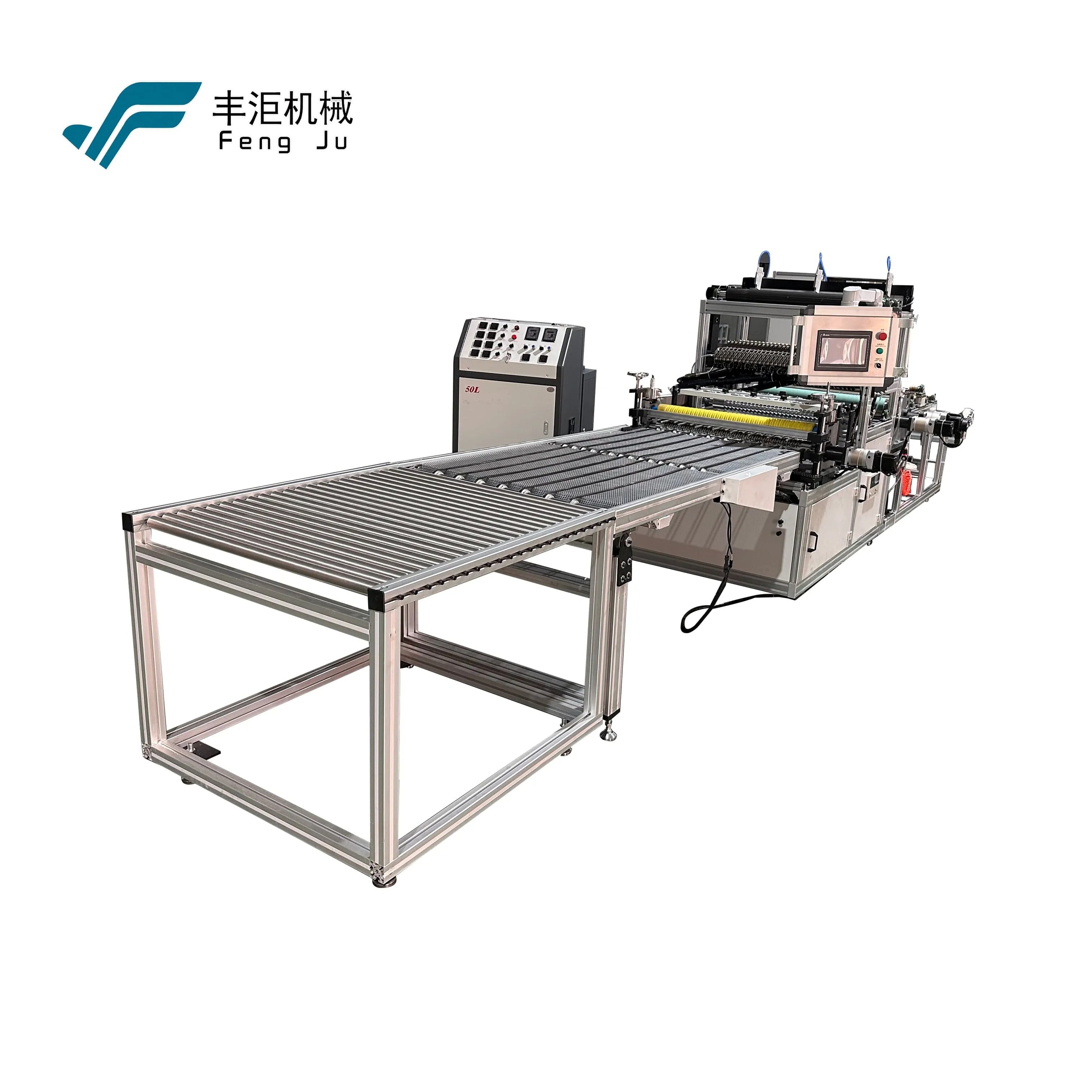
A hepa air filter machine is a sophisticated piece of industrial equipment designed to manufacture high-efficiency particulate air filters with precision, consistency, and speed. Understanding what makes up this machine is essential for anyone involved in filter production, quality control procurement, or manufacturing line design. From the raw fiberglass media feeding unit to the final gluing and folding mechanisms, each component plays a critical and interdependent role in determining both output quality and operational throughput.
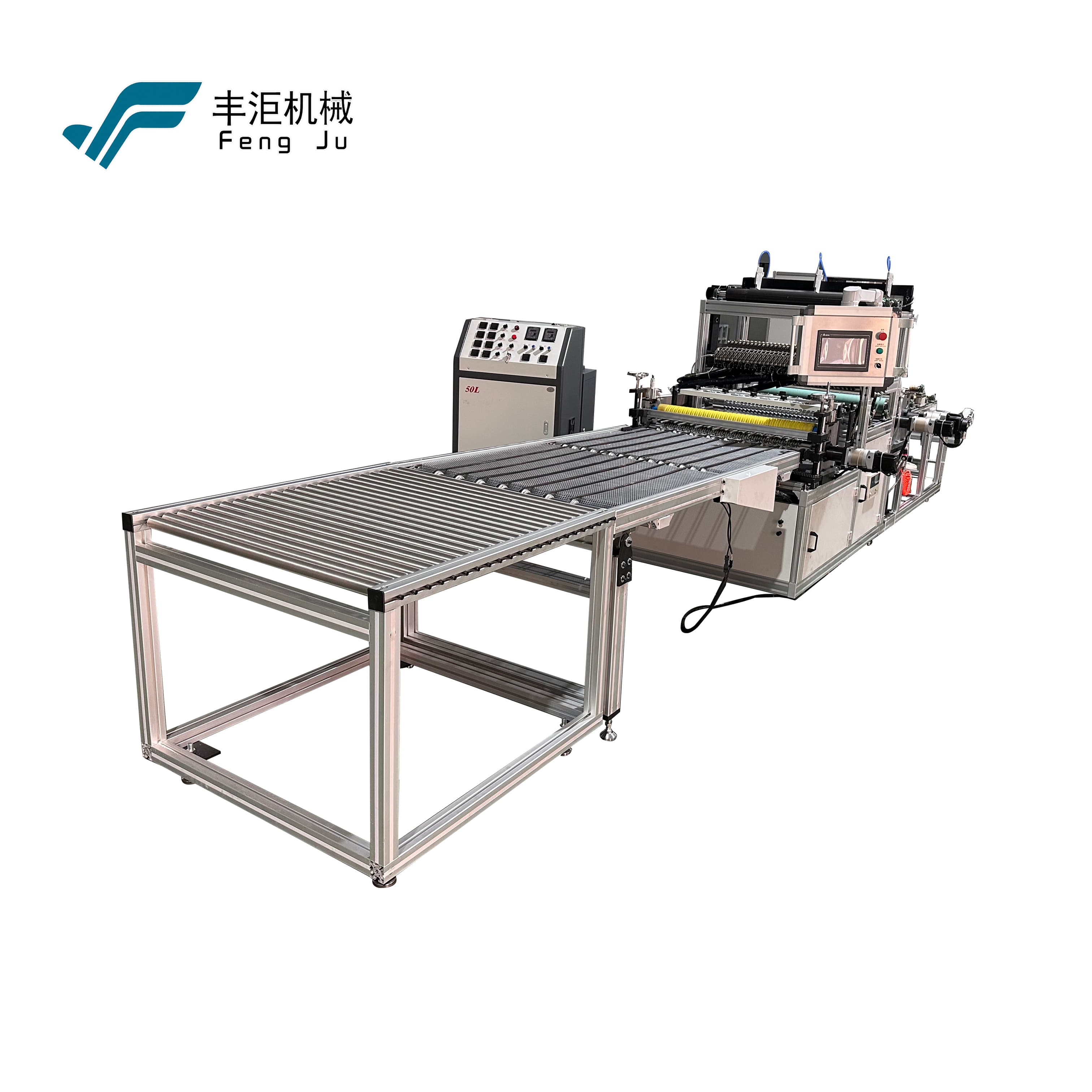
The global demand for clean air solutions has accelerated the adoption of automated hepa air filter machine systems in manufacturing facilities across a wide range of industries, including healthcare, electronics, pharmaceuticals, and HVAC. As filter specifications become increasingly stringent, the internal architecture of these machines must meet equally demanding standards. This article breaks down the core components of a hepa air filter machine, explaining the function of each part and how they collectively contribute to producing HEPA-grade filters that meet international filtration benchmarks.
Media Handling and Feeding System
Unwinding and Tensioning Mechanism
The media handling system is the starting point of any hepa air filter machine. It manages the raw fiberglass filter media roll, which is the primary filtration material used in HEPA-grade filters. The unwinding unit holds the media roll on a spindle and allows it to feed continuously into the machine without tearing or stretching the delicate material.
A tensioning mechanism runs in parallel with the unwinder to ensure the media feeds at a consistent and controlled rate. Without adequate tension control, the fiberglass media can buckle, wrinkle, or misalign, all of which can compromise the structural integrity of the finished filter pleats. Precise tension regulation is therefore fundamental to maintaining downstream dimensional accuracy.
Advanced hepa air filter machine designs often incorporate servo-driven tension feedback systems that automatically adjust roller pressure based on real-time media thickness and roll diameter. This level of automation reduces operator intervention and keeps the feeding rate stable across long production runs, which is critical for maintaining filter media uniformity.
Media Alignment and Edge Guiding
Once the media begins feeding into the hepa air filter machine, an edge guiding system ensures it travels along a perfectly linear path. Even small lateral deviations can create uneven pleating, which affects both airflow distribution and particle capture efficiency in the final product.
Edge sensors, typically using ultrasonic or photosensor technology, continuously monitor the position of the media relative to a fixed reference point. When deviation is detected, pneumatic or motorized guide rails correct the media path in real time. This component is often underappreciated but is directly responsible for ensuring that every pleat formed downstream is dimensionally consistent.
Pleating Unit
Rotary Pleating Blades and Folding Arms
The pleating unit is arguably the most mechanically intricate component of any hepa air filter machine. Its function is to fold the flat fiberglass media into accordion-style pleats of a specific pitch and depth, which defines the effective filtration surface area of the finished HEPA filter. The pleating blades or folding arms must operate with high repetitive precision because any variation in fold depth or spacing directly affects filter resistance and efficiency ratings.
Rotary blade systems use a set of counter-rotating cam-driven blades to create each fold, while reciprocating arm systems use oscillating plates to form pleats in sequence. The hepa air filter machine type selected for a production line often depends on the desired pleat pitch, filter depth, and media stiffness. Fiberglass media used in HEPA applications requires a particularly controlled folding force to avoid micro-tears in the fiber structure.
The speed of the pleating unit is also a defining factor in overall machine throughput. Higher-speed systems require tighter synchronization between the feeding rollers, the glue application module, and the cutting station. A well-engineered hepa air filter machine maintains this synchronization through a central programmable logic controller that governs all moving units simultaneously.
Separator Insertion Mechanism
In high-performance or industrial-grade HEPA filter construction, rigid separators are inserted between pleats to maintain consistent pleat spacing throughout the filter's service life. The separator insertion mechanism on a hepa air filter machine automates this process by feeding pre-cut aluminum foil or hot-melt bead separators in synchrony with each pleat cycle.
The separator ensures that airflow is distributed evenly across the entire filter face rather than channeling through collapsed or compressed pleat sections. Machines equipped with automatic separator insertion are typically used for filterbank-grade or critical environment HEPA applications where geometric stability is non-negotiable. This mechanism adds mechanical complexity but substantially increases the commercial value and performance classification of the output filter.
Gluing and Bonding System
Hot Melt Adhesive Application Unit
The gluing system is one of the most operationally sensitive components in a hepa air filter machine. Its primary function is to apply hot melt adhesive in precise bead patterns along the pleat edges or separator interfaces to bond the structure and prevent pleat migration during use. The quality and consistency of adhesive application has a direct impact on filter durability and long-term performance.
The adhesive unit typically consists of a heated reservoir, a precision dispensing valve, and nozzle heads that deposit adhesive beads in synchrony with the pleating cycle. Temperature regulation of the adhesive tank is critical because viscosity changes caused by temperature fluctuation can alter bead width, penetration depth, and bond strength. Modern hepa air filter machine gluing systems use closed-loop temperature controllers to maintain adhesive at the optimal application range.
Nozzle calibration is another important parameter. Misaligned nozzles can result in adhesive being deposited on the filtration surface rather than the structural interface, blocking airflow pathways and artificially increasing filter resistance. Regular nozzle inspection and automated deposit-pattern monitoring are standard features on production-grade hepa air filter machine installations.
Curing and Setting Zone
After the adhesive is applied, the bonded filter element must pass through a curing zone where the hot melt adhesive solidifies and reaches full bond strength. This section of the hepa air filter machine typically uses a controlled cooling channel, sometimes assisted by low-volume airflow, to accelerate setting without introducing thermal stress that could distort the pleat geometry.
The length and temperature profile of the curing zone must be matched to the adhesive formulation and production line speed. If the bond does not achieve sufficient strength before the next mechanical operation—such as cutting or framing—the filter structure can shift, producing dimensional non-conformance. Proper curing zone design is therefore integral to maintaining product consistency across high-speed hepa air filter machine runs.
Cutting and Sizing Station
Automatic Length Cutting Unit
Once the pleated and bonded filter media exits the curing zone, it must be cut to the required filter length. The cutting station on a hepa air filter machine uses either a guillotine blade, rotary knife, or ultrasonic cutter to segment the continuous pleated output into discrete filter elements of a specified dimension. Cutting accuracy is essential because HEPA filters must fit precisely within their mounting frames to prevent bypass leakage.
The cut length is controlled by the machine's PLC in coordination with a linear encoder or positional sensor that tracks the media travel distance from a reference point. On modern hepa air filter machine models, operators can input target cut lengths through a touchscreen interface, and the system automatically adjusts knife timing to match. This capability allows rapid changeover between different filter size specifications without mechanical retooling.
Blade maintenance is a frequently overlooked but critical factor. A dull cutting edge can crush rather than cleanly sever the fiberglass pleats, introducing fiber contamination at the cut face and weakening the structural bond at the terminal pleat. Scheduled blade replacement is a standard maintenance requirement on any production hepa air filter machine.
Edge Sealing and Frame Integration
In many production configurations, the cutting station is followed by an edge sealing or framing unit that completes the filter assembly. This station applies a secondary bead of sealant or adhesive around the perimeter of the cut filter element and positions it within a metal, wood, or polymer frame. The seal between the filter media and the frame is one of the most structurally critical points in HEPA filter construction, as any gap can allow unfiltered air to bypass the filter media entirely.
A hepa air filter machine configured with integrated framing capability significantly reduces the number of manual handling steps required in the production workflow, lowering labor costs and the risk of contamination or damage during inter-station transfer. Automated frame placement and pressing systems can be tuned to achieve consistent sealant compression depth, which is directly linked to filter leak test performance during quality verification.
Control System and Automation Architecture
Programmable Logic Controller and HMI Interface
The control system is the operational brain of the hepa air filter machine. A programmable logic controller manages the timing, sequencing, and feedback loops that coordinate every mechanical and thermal subsystem within the machine. The PLC communicates with servo drives, sensor arrays, heating controllers, and pneumatic valves to maintain synchronized operation across all stations simultaneously.
The human-machine interface typically consists of a color touchscreen panel that allows operators to set production parameters, monitor real-time status indicators, and access fault diagnostics. On production-grade hepa air filter machine installations, parameter sets for different filter models can be saved as named programs and recalled instantly, eliminating manual re-calibration time during product changeovers.
Data logging capabilities are increasingly standard on modern hepa air filter machine control systems. Production counts, fault histories, adhesive temperature trends, and cutting cycle timing can all be recorded and exported for quality assurance reporting and predictive maintenance planning. This level of process traceability is becoming a customer requirement in regulated industries such as pharmaceutical manufacturing and cleanroom construction.
Safety Systems and Fault Detection
A production hepa air filter machine must incorporate multiple safety systems to protect both the operator and the equipment. Emergency stop circuits, light curtains at moving stations, and pressure relief valves on pneumatic systems are all standard protective features. Thermal runaway prevention in the adhesive heating system is particularly important, as overheated hot melt can pose a fire risk and damage the media feeding mechanism.
Fault detection logic within the PLC monitors for out-of-range conditions such as media jam signals from tension sensors, nozzle blockage indicated by adhesive pressure spikes, or cut-length deviation outside tolerance limits. When a fault is detected, the system halts automatically, logs the event, and displays a diagnostic code to guide the operator through the corrective action procedure. This reduces unplanned downtime and prevents the production of non-conforming filters that would otherwise require rework or scrap.
FAQ
What type of media is used in a hepa air filter machine?
Most hepa air filter machine systems are designed to process borosilicate glass fiber media, commonly referred to as fiberglass HEPA media. This material provides the sub-micron fiber structure needed to achieve HEPA-grade particle capture efficiency (typically 99.97% at 0.3 microns). Some machines can also process synthetic fiber media, but the mechanical settings for tension, pleating force, and adhesive parameters must be adjusted accordingly.
How does a hepa air filter machine maintain pleat consistency at high speeds?
A hepa air filter machine achieves pleat consistency through synchronized servo motor control, closed-loop feedback from positional encoders, and real-time tension regulation. As production speed increases, the PLC dynamically adjusts knife timing, adhesive dispensing frequency, and folding arm velocity to ensure that every pleat maintains the same pitch and depth as defined in the programmed filter specification.
What maintenance intervals are typical for a hepa air filter machine?
Maintenance schedules for a hepa air filter machine typically include daily inspection of nozzle deposits and cutting blade condition, weekly cleaning of the adhesive reservoir and tensioning rollers, and monthly lubrication of cam-driven pleating mechanisms and servo gearboxes. The frequency depends on production volume and media type, but consistent preventive maintenance is the primary factor in sustaining long-term dimensional accuracy and minimizing unplanned downtime.
Can a single hepa air filter machine produce multiple filter sizes?
Yes, most modern hepa air filter machine models support multi-format production through programmable parameter sets stored in the PLC. Operators can switch between different filter lengths, pleat depths, and separator pitches by loading the corresponding program and making minor mechanical adjustments to guide rails or nozzle positions. The extent of flexibility depends on the machine's design range, so specifying the required filter size spectrum before equipment procurement is strongly recommended.