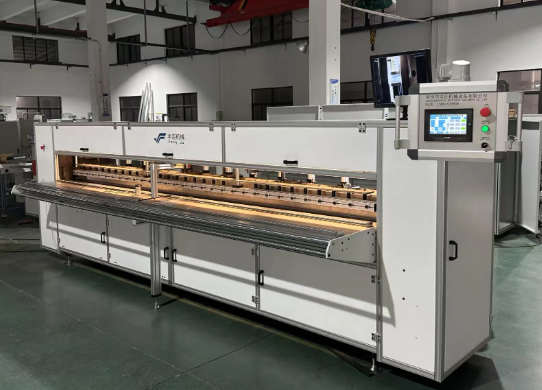
Understanding the differences between semi and fully automatic pleating machine options is essential for manufacturers seeking to balance production efficiency, equipment investment, adjustment convenience, and pleat consistency. The key difference between these two technologies lies in their driving structures and pleat height adjustment methods. Semi-automatic pleating machines use a cam mechanism to perform the pleating action, while fully automatic pleating machines use servo motors for more precise and flexible control.
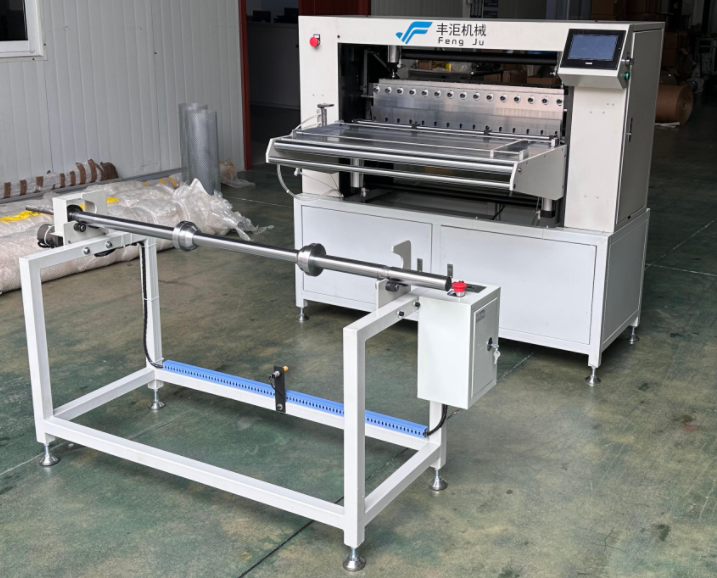
Both semi and fully automatic pleating machine configurations can be used for pleating production, but they differ significantly in operating speed, pleat height adjustment, production efficiency, equipment cost, and operating convenience. Semi-automatic machines provide a simpler mechanical structure and lower equipment cost, while fully automatic machines provide faster production, touchscreen parameter adjustment, and more stable pleat height consistency. Selecting between them requires evaluating production volume, specification change frequency, operator experience, equipment budget, and efficiency requirements.
Operational Functionality and Labor Integration
Semi-Automatic Pleating Machine Process Flow
A semi-automatic pleating machine uses a cam mechanism to drive and control the pleating action. Compared with a fully automatic servo-driven model, its operating speed is relatively lower, which limits overall production efficiency. However, the simpler mechanical structure also reduces equipment complexity and makes the machine easier to maintain.
Pleat height adjustment on a semi-automatic pleating machine is completed manually rather than through automatic electrical control. When operators need to change the pleat height, they typically add or remove shims or adjust mechanical screws to achieve the required pleat size. This adjustment process requires the machine to stop while the operator completes the mechanical setup.
Because pleat height depends on manual adjustment, operator experience plays an important role in setup accuracy and production consistency. Proper adjustment can maintain reliable pleat dimensions, while differences in operator skill may affect pleat height consistency. This operating model is therefore more suitable for small and medium production batches where specification changes are less frequent and maximum production speed is not the primary requirement.
Fully Automatic Pleating Machine Integration
A fully automatic pleating machine uses a servo motor to drive and control the pleating process. The servo control system allows the machine to operate at a higher speed than a cam-type semi-automatic pleating machine, improving overall production efficiency and making the equipment more suitable for continuous production.
One of the main advantages of the fully automatic pleating machine is its pleat height adjustment method. Instead of manually adding shims or adjusting screws, operators can directly set the required pleat height parameters through the touchscreen. This simplifies machine adjustment and reduces the amount of manual mechanical setup required during specification changes.
The fully automatic pleating machine also provides a higher degree of automation during production. When changing pleat specifications, operators do not need to dismantle adjustment components or manually modify the mechanical structure. Servo control helps maintain stable pleat dimensions and consistent production results, making the system particularly suitable for manufacturers requiring higher output and frequent specification changes.
Production Capacity and Economic Performance
Output and Throughput Differences
Semi-automatic pleating machine production speed is relatively lower because the pleating action is controlled through a cam mechanism and specification adjustments require manual intervention. When changing pleat height, operators need to stop the machine and manually adjust shims or screws before restarting production. These mechanical adjustment steps can increase changeover time and reduce overall production efficiency when multiple specifications are processed.
Fully automatic pleating machine systems achieve faster processing through servo motor control. Pleat height can be adjusted directly through touchscreen parameters, eliminating the need for repeated mechanical adjustment. Faster operation and more convenient specification changes improve overall throughput, particularly in large-batch or continuous production environments. For manufacturers with high production requirements, this efficiency advantage can become an important factor when selecting pleating equipment.
Capital Investment and Payback Analysis
Semi-automatic pleating machine systems generally require lower equipment investment because of their relatively simple cam-based mechanical structure. The machine contains fewer complex control components, making both initial equipment cost and maintenance requirements comparatively lower. This makes semi-automatic pleating machines a practical option for manufacturers with limited equipment budgets or moderate production requirements.
Fully automatic pleating machine systems require a higher initial investment because they use servo motors and more advanced control systems. However, this additional investment provides faster processing, easier pleat height adjustment, improved operating convenience, and more stable pleat consistency. Manufacturers should therefore evaluate equipment cost together with production volume, specification change frequency, and long-term efficiency requirements rather than focusing only on initial purchase cost.
Flexibility, Maintenance, and Implementation Considerations
Adaptability to Production Variety
Semi-automatic pleating machine operators can change pleat height by manually adding or removing shims or adjusting screws. This mechanical adjustment method is straightforward but requires the machine to stop during specification changes. The adjustment result also depends partly on operator experience, especially when accurate and consistent pleat dimensions are required.
For manufacturers producing relatively stable specifications or operating small and medium production batches, this manual adjustment method can still provide sufficient flexibility. However, when pleat specifications change frequently, repeated mechanical setup increases operating time and places greater requirements on operator familiarity with the machine.
Fully automatic pleating machine systems provide greater adjustment convenience through servo motor control and touchscreen parameter settings. Operators can change the required pleat height directly on the control interface without manually adding shims or adjusting mechanical screws. This allows faster specification changes and reduces the dependence on manual setup experience.
The servo control system also improves pleat height repeatability. Once the required parameter is entered, the machine can maintain more stable pleat dimensions during production. This makes fully automatic pleating machines particularly suitable for operations that frequently switch between different pleat specifications or require consistent output over long production runs.
Maintenance Requirements and Technical Support
Semi-automatic pleating machine systems feature a simpler mechanical structure based on the cam mechanism. This design reduces equipment complexity and makes routine maintenance relatively convenient. Mechanical adjustment, inspection, and maintenance are generally easier to perform, helping manufacturers reduce maintenance difficulty.
The simpler construction is also one of the reasons why semi-automatic pleating machines have a lower equipment cost. For manufacturers that prioritize straightforward operation, convenient maintenance, and controlled capital investment, the cam-type semi-automatic machine can provide a practical production solution.
Fully automatic pleating machine installations incorporate servo motors and electronic control systems to achieve higher production speed and automatic pleat height adjustment. These components provide greater precision and operating convenience but also make the equipment structure more complex than a cam-type semi-automatic model.
As a result, fully automatic pleating machines generally involve higher equipment investment. However, the added control capability provides advantages in production efficiency, specification change speed, and pleat height consistency. Manufacturers operating high-volume production lines may find these benefits more important than the additional equipment cost.
FAQ
When should a manufacturer choose a semi-automatic pleating machine over a fully automatic pleating machine?
Manufacturers should consider a semi-automatic pleating machine when production volumes are small or medium, equipment budgets are limited, or pleat specifications do not need to be changed frequently. The cam-type mechanical structure is simple, equipment cost is relatively low, and maintenance is convenient.
Semi-automatic pleating machines are also suitable for manufacturers that have experienced operators capable of manually adjusting pleat height through shims or screws. When maximum production speed and frequent automatic specification changes are not required, the semi-automatic pleating machine can provide an economical and practical solution.
What are the total cost-of-ownership differences between semi and fully automatic pleating machine operations?
Semi-automatic pleating machines generally have a lower initial equipment cost because of their simpler cam-driven mechanical structure. Maintenance is also relatively straightforward. However, pleat height changes require manual adjustment and machine stoppage, which can reduce efficiency when specifications change frequently.
Fully automatic pleating machines require higher equipment investment because they use servo motors and automatic control systems. In return, manufacturers gain faster production speed, touchscreen pleat height adjustment, easier specification changes, and more stable pleat consistency. The most suitable option therefore depends on whether the manufacturer prioritizes lower initial investment or higher long-term production efficiency.
Can a semi-automatic pleating machine be upgraded to fully automatic pleating machine capability later?
A semi-automatic and a fully automatic pleating machine use different driving and control structures. Semi-automatic machines rely on a cam mechanism and manual pleat height adjustment, while fully automatic machines use servo motors and touchscreen parameter control.
Because the core control methods are different, manufacturers planning future production expansion should evaluate their expected production volume, specification change requirements, and automation needs when selecting equipment. If high-speed continuous production and convenient automatic pleat height adjustment are important long-term requirements, choosing a fully automatic servo-controlled pleating machine from the beginning may be more suitable.
Table of Contents
- Operational Functionality and Labor Integration
- Production Capacity and Economic Performance
- Flexibility, Maintenance, and Implementation Considerations
-
FAQ
- When should a manufacturer choose a semi-automatic pleating machine over a fully automatic pleating machine?
- What are the total cost-of-ownership differences between semi and fully automatic pleating machine operations?
- Can a semi-automatic pleating machine be upgraded to fully automatic pleating machine capability later?