
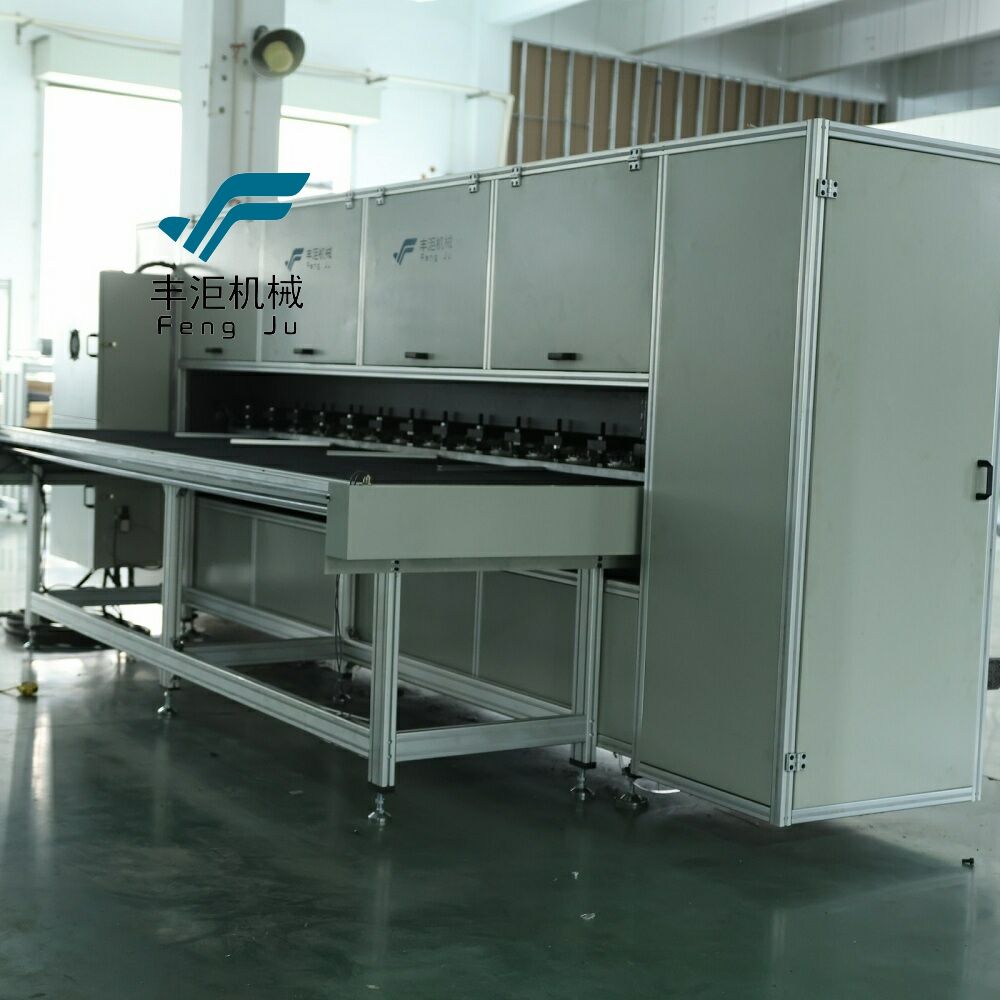
Automatic curtain pleating machines have revolutionized the textile manufacturing industry by offering unprecedented precision, speed, and efficiency in fabric pleating operations. These advanced machines provide significant advantages over traditional manual pleating methods, enabling manufacturers to meet growing market demands while maintaining consistent quality standards. Understanding the specific benefits of automatic curtain pleating technology is essential for textile businesses seeking to optimize their production capabilities and competitive positioning.
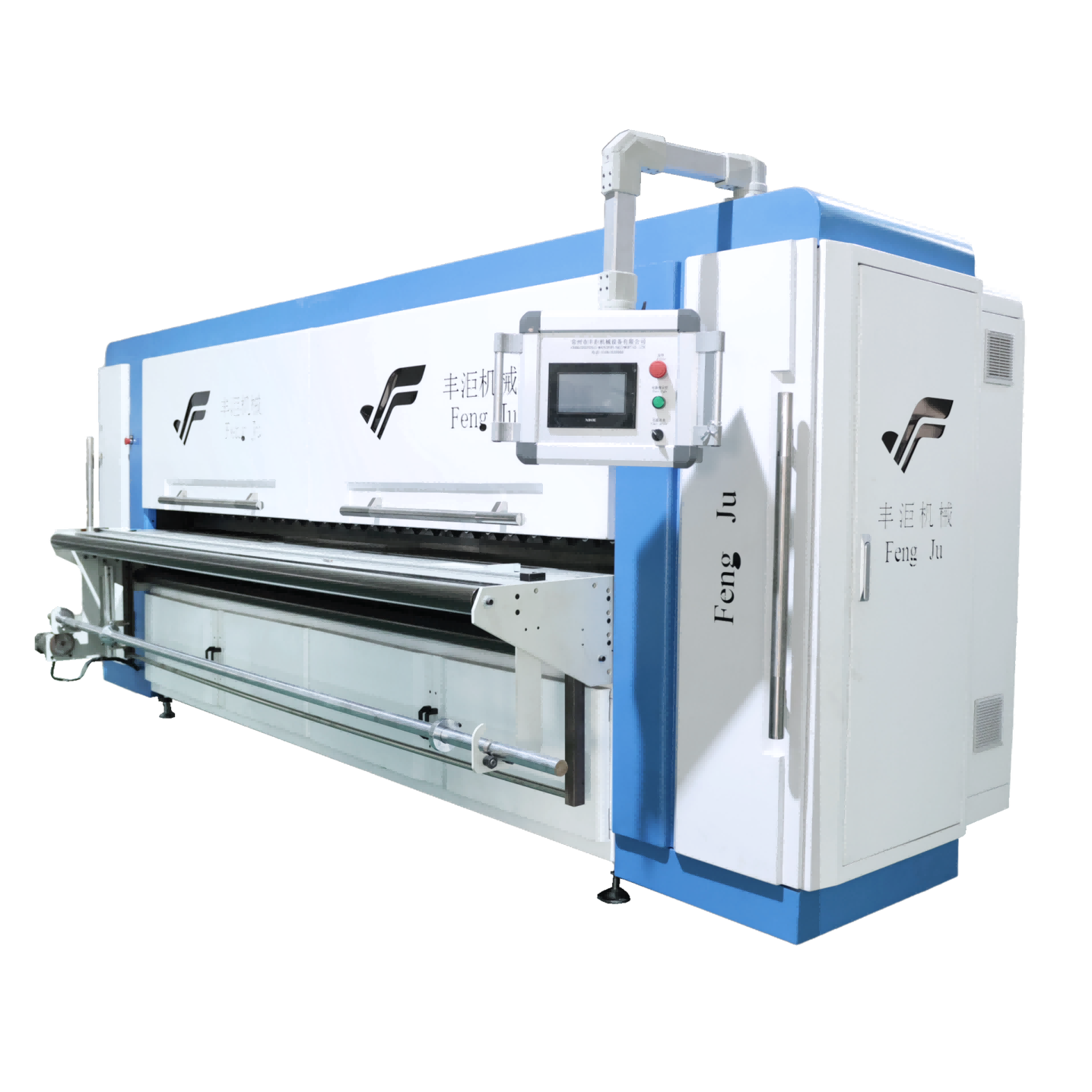
The transition from manual to automatic pleating represents a fundamental shift in how textile manufacturers approach curtain production. Modern curtain pleating machines deliver measurable improvements in operational efficiency, product consistency, and production scalability. These advantages translate directly into enhanced profitability, reduced labor costs, and improved market competitiveness for manufacturers across various textile industry segments.
Enhanced Production Efficiency and Speed
Accelerated Processing Capabilities
Automatic curtain pleating machines significantly outperform manual pleating methods in terms of processing speed. A typical automated curtain pleating machine can process fabric at rates of 15-30 meters per minute, depending on fabric type and pleat specifications. This represents a 300-500% increase in processing speed compared to manual pleating operations, which typically achieve 3-6 meters per minute under optimal conditions.
The speed advantage becomes particularly pronounced when handling large production volumes or rush orders. Manufacturers can complete substantial pleating projects within compressed timeframes, enabling them to respond rapidly to market demands and maintain competitive delivery schedules. This processing velocity directly impacts overall production capacity and revenue generation potential.
Advanced curtain pleating machine models incorporate variable speed controls, allowing operators to adjust processing rates according to fabric characteristics and quality requirements. This flexibility ensures optimal balance between speed and precision, accommodating diverse production scenarios without compromising output quality.
Continuous Operation Capability
Unlike manual pleating operations that require regular breaks and shift changes, automatic curtain pleating machines can operate continuously for extended periods with minimal supervision. This continuous operation capability enables manufacturers to maximize equipment utilization rates and achieve higher overall productivity per unit of time invested.
The continuous operation advantage extends beyond basic production hours, as modern curtain pleating machines can be integrated into overnight production schedules. This around-the-clock operational capability allows manufacturers to optimize facility utilization and meet demanding production targets without proportional increases in labor costs.
Automated systems also eliminate fatigue-related performance variations that commonly affect manual operations. The consistent mechanical precision ensures uniform pleating quality regardless of operation duration, maintaining product standards throughout extended production runs.
Superior Quality Control and Consistency
Precision Pleat Formation
Automatic curtain pleating machines deliver exceptional precision in pleat formation, achieving consistent fold dimensions and spacing that would be impossible to maintain through manual methods. The mechanical precision of automated systems ensures that each pleat maintains identical depth, width, and spacing parameters throughout the entire fabric length.
This precision advantage becomes particularly valuable when producing high-end curtain products that require exact specifications. Luxury residential and commercial applications demand perfect pleat consistency, which automatic curtain pleating machine systems can deliver reliably across large production volumes.
The precision capabilities also extend to complex pleat patterns and specialized configurations. Advanced curtain pleating machines can execute intricate pleating designs that would be extremely difficult or impossible to achieve manually, expanding the range of products that manufacturers can offer to their customers.
Eliminated Human Error Variables
Manual pleating operations are inherently susceptible to human error factors including inconsistent pressure application, irregular spacing, and attention lapses. Automatic curtain pleating machines eliminate these variables by maintaining consistent mechanical parameters throughout the entire production process.
The elimination of human error translates into significantly reduced defect rates and waste generation. Manufacturers typically experience 60-80% reductions in pleating defects when transitioning from manual to automatic systems, resulting in substantial material cost savings and improved customer satisfaction levels.
Consistent quality output also reduces the need for extensive quality inspection procedures, as automatic systems maintain predictable performance standards. This reliability allows manufacturers to implement streamlined quality control processes while maintaining confidence in product quality outcomes.
Significant Labor Cost Reduction
Reduced Workforce Requirements
Automatic curtain pleating machines dramatically reduce the number of operators required to achieve equivalent production outputs. A single automatic curtain pleating machine typically replaces 4-6 manual pleating operators while delivering superior throughput and quality results.
This workforce reduction translates into substantial ongoing labor cost savings, particularly in regions where skilled textile workers command premium wages. The reduced labor requirements also minimize exposure to workforce availability issues and reduce dependency on specialized skill sets that may be difficult to source consistently.
The labor cost advantages extend beyond direct operator wages to include reduced training costs, benefit expenses, and administrative overhead associated with larger workforce management. These comprehensive savings contribute significantly to improved operational profitability.
Skill Level Optimization
Automatic curtain pleating machines require operators with basic technical skills rather than specialized hand-pleating expertise. This skill level optimization enables manufacturers to recruit from broader labor pools and reduce dependency on highly specialized craftspeople whose availability may be limited.
The reduced skill requirements also facilitate faster training programs and more efficient staff rotation capabilities. New operators can typically achieve productive performance levels within days rather than the weeks or months required to develop manual pleating proficiency.
This skill optimization advantage becomes particularly valuable in regions experiencing skilled labor shortages or when expanding operations require rapid workforce scaling. Manufacturers can achieve operational growth without being constrained by specialized skill availability.
Enhanced Operational Flexibility and Scalability
Adaptable Production Configurations
Modern curtain pleating machines offer exceptional flexibility in handling diverse fabric types and pleat specifications. These systems can be quickly reconfigured to accommodate different material weights, widths, and pleating patterns without requiring extensive setup time or specialized tooling changes.
The adaptability advantage enables manufacturers to respond efficiently to varied customer requirements and market opportunities. Rather than maintaining separate manual pleating capabilities for different product types, a single automatic curtain pleating machine can handle the full range of production requirements with appropriate configuration adjustments.
Advanced curtain pleating machines also incorporate programmable controls that allow operators to store and recall specific configuration settings for different products. This programmability feature enables rapid production transitions and ensures consistent setup parameters for recurring orders.
Scalable Production Capacity
Automatic curtain pleating machines provide scalable production capacity that can be adjusted according to demand fluctuations and business growth requirements. Manufacturers can increase output simply by extending operating hours rather than proportionally expanding workforce or facility requirements.
The scalability advantage becomes particularly valuable for businesses experiencing seasonal demand variations or pursuing market expansion opportunities. Rather than maintaining oversized manual operations during low-demand periods, manufacturers can adjust automatic system utilization rates to match actual production requirements efficiently.
This scalability also supports strategic business planning by providing predictable capacity expansion pathways. Manufacturers can model growth scenarios with confidence, knowing that automatic curtain pleating machine capacity can be leveraged to support increased production targets without proportional infrastructure investments.
Improved Safety and Working Conditions
Reduced Physical Strain
Manual curtain pleating operations involve repetitive motions and sustained physical effort that can lead to operator fatigue and repetitive strain injuries. Automatic curtain pleating machines eliminate these physical demands by handling all pleating motions mechanically, creating safer working environments for operators.
The physical strain reduction contributes to improved operator satisfaction and reduced absenteeism rates. Workers operating automatic systems experience less fatigue and can maintain higher performance levels throughout their shifts, contributing to overall operational efficiency.
Reduced physical demands also enable manufacturers to employ workers across broader age ranges and physical capability levels, expanding available labor pools and supporting more inclusive employment practices.
Enhanced Workplace Safety
Automatic curtain pleating machines incorporate comprehensive safety systems including emergency stops, protective barriers, and automated fault detection capabilities. These safety features significantly reduce accident risks compared to manual pleating operations that involve direct hand contact with moving fabric and tools.
The enhanced safety profile translates into reduced insurance costs, lower workers' compensation claims, and improved regulatory compliance. Manufacturers benefit from fewer workplace incidents and associated operational disruptions that can impact production schedules and costs.
Modern curtain pleating machines also include user-friendly interfaces and intuitive controls that minimize operator error risks. These design features contribute to safer operation while reducing training requirements and improving overall system reliability.
FAQ
How much faster are automatic curtain pleating machines compared to manual pleating?
Automatic curtain pleating machines typically operate at 15-30 meters per minute, which is 300-500% faster than manual pleating methods that achieve 3-6 meters per minute. This speed advantage translates into dramatically higher production capacity and faster order completion times for textile manufacturers.
What types of fabrics can automatic curtain pleating machines handle?
Modern curtain pleating machines can handle a wide range of fabric types including cotton, polyester, silk, linen, and various blended materials. These machines feature adjustable settings for different fabric weights and characteristics, enabling manufacturers to process diverse product lines using a single automated system.
Do automatic curtain pleating machines require specialized maintenance?
Automatic curtain pleating machines require routine maintenance similar to other industrial equipment, including regular cleaning, lubrication, and component inspections. Most manufacturers provide comprehensive maintenance schedules and support services to ensure optimal performance. The maintenance requirements are generally straightforward and can be handled by standard technical personnel with appropriate training.
What is the typical return on investment for automatic curtain pleating machines?
Most textile manufacturers achieve return on investment within 12-24 months when implementing automatic curtain pleating machines. The ROI is driven by reduced labor costs, increased production capacity, improved quality consistency, and reduced material waste. Specific ROI timeframes depend on production volumes, labor costs in the region, and the complexity of pleating operations being automated.