
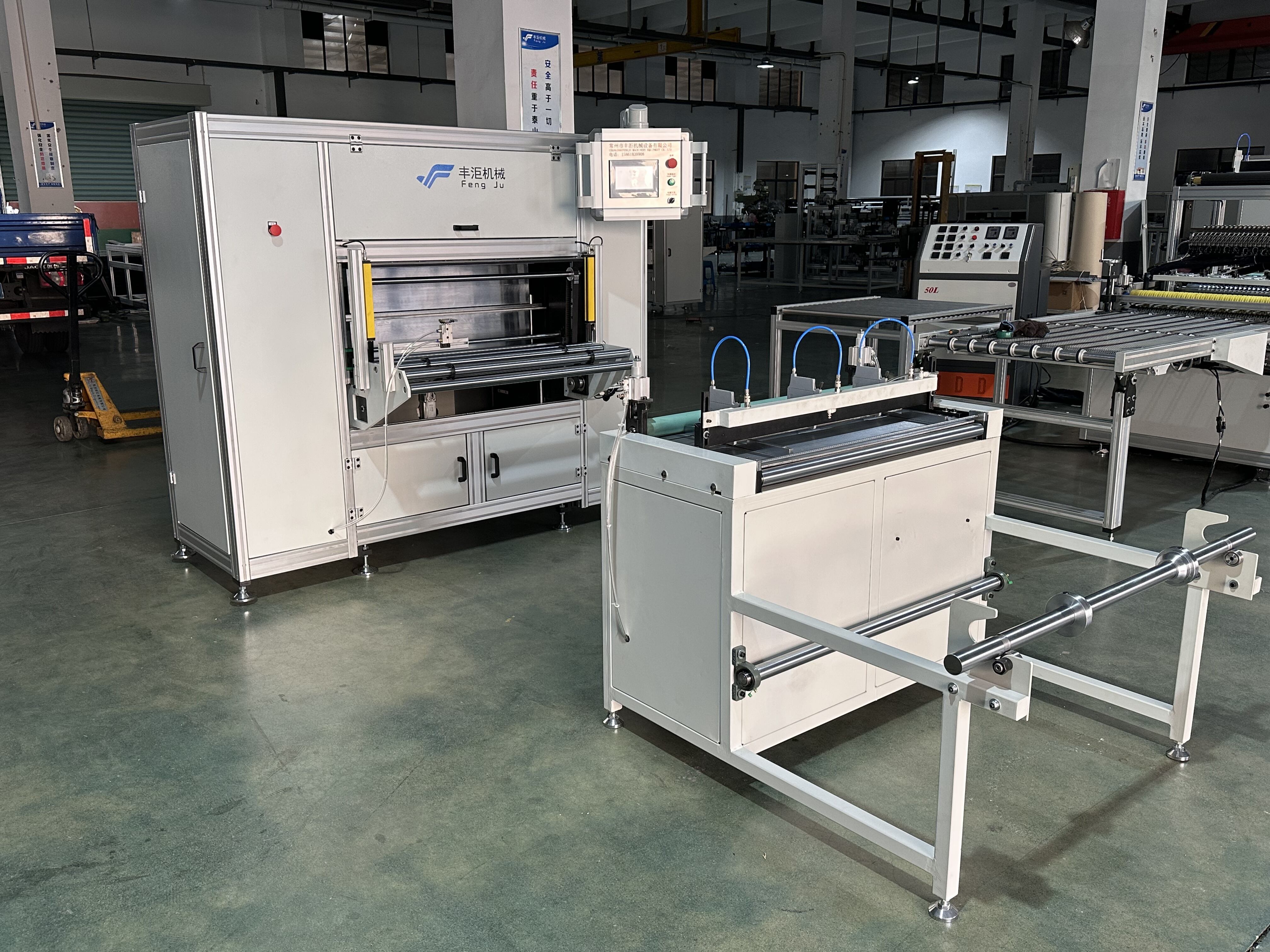
The filtration manufacturing industry is undergoing a significant technological transformation, and at the center of this evolution is the filter pleating machine. For B2B manufacturers operating in sectors ranging from HVAC and automotive filtration to industrial air purification and liquid processing, staying current with the latest advances in pleating technology is no longer optional — it is a competitive imperative. The machines responsible for folding and shaping filter media have become dramatically more sophisticated, delivering higher throughput, greater precision, and expanded compatibility with next-generation filter materials.
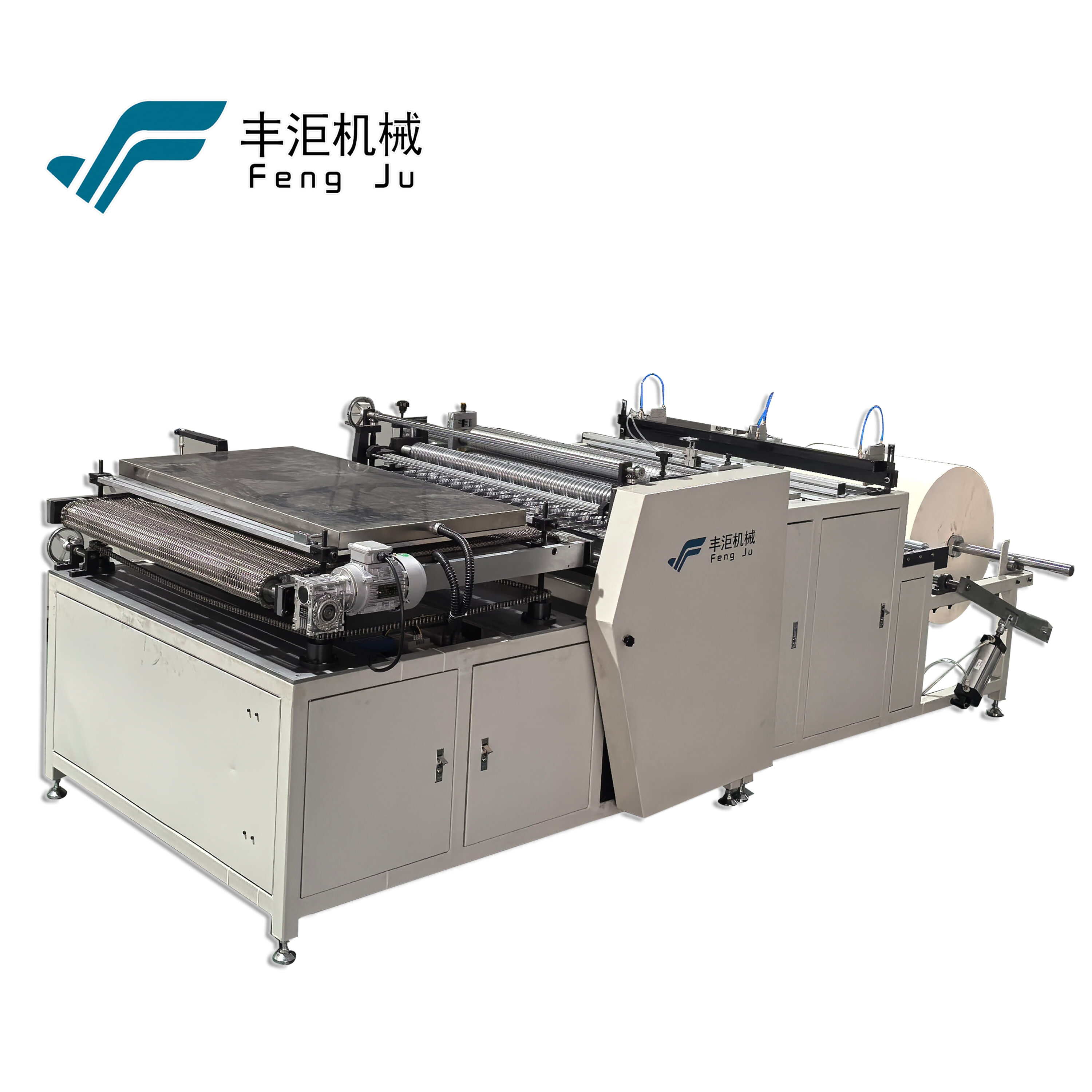
In this article, we explore the most impactful recent innovations shaping the modern filter pleating machine landscape. Whether you are a production engineer evaluating equipment upgrades, a procurement manager assessing total cost of ownership, or a business owner planning a capacity expansion, understanding these advancements will help you make smarter investment decisions. From servo-driven motion control to intelligent automation and environmentally conscious design, the new generation of pleating equipment is redefining what is possible on the production floor.
Precision Motion Control and Servo-Driven Architecture
Transition from Mechanical Cam Systems to Servo Technology
One of the most transformative shifts in filter pleating machine design over the past several years has been the transition from traditional mechanical cam-based drive systems to fully servo-driven architecture. Legacy cam systems, while durable, imposed rigid constraints on pleat pitch adjustment and limited the range of media types that a single machine could process. Changing pleat dimensions required physical tooling changes, which translated directly into costly downtime and operator labor.
Modern servo-driven filter pleating machine platforms have eliminated most of these constraints. Servo motors provide electronically programmable motion profiles, allowing pleat pitch, folding speed, and feeding tension to be adjusted through a digital interface without any mechanical intervention. This means a single machine can be reconfigured for different filter specifications in minutes rather than hours, dramatically improving production flexibility for manufacturers handling diverse product portfolios.
The precision benefits extend beyond setup time. Servo control enables consistent pleat geometry across very high production volumes, reducing reject rates and improving downstream assembly quality. For manufacturers supplying to sectors with tight dimensional tolerances — such as HEPA filter production or automotive cabin air filters — this level of repeatability is a critical quality differentiator.
Closed-Loop Feedback and Real-Time Correction
Closely paired with servo technology is the implementation of closed-loop feedback systems in the latest filter pleating machine designs. These systems use sensors — including encoder feedback, tension measurement devices, and optical pleat counters — to continuously monitor the actual output of the machine and compare it against programmed parameters. When deviations occur, the control system makes micro-corrections in real time, maintaining target specifications throughout long production runs.
This capability is particularly valuable when processing non-woven synthetic media, glass fiber, or electrostatically charged materials that can exhibit variable tension behavior as the material roll depletes. Without closed-loop correction, these variations would accumulate into measurable defects. A modern filter pleating machine equipped with intelligent feedback loops essentially self-compensates, reducing dependence on continuous operator supervision and enabling lights-out or semi-automated production segments.
Rotary Pleating Technology and Its Advantages for High-Volume Production
How Rotary Architecture Differs from Reciprocating Systems
Rotary pleating represents one of the most significant structural innovations to enter the filter pleating machine category in recent decades. Unlike conventional reciprocating blade systems, which rely on an oscillating folding mechanism that alternates between forward and return strokes, rotary pleating machines use a continuous rotational motion to form pleats. This fundamental mechanical difference yields substantial advantages in speed, energy efficiency, and mechanical longevity.
Because rotary motion eliminates the deceleration and reversal inherent in reciprocating systems, a filter pleating machine using rotary architecture can operate at significantly higher cycle rates while generating less mechanical vibration. Reduced vibration has a cascading positive effect: media feeding is more stable, pleat geometry is more consistent, and wear on mechanical components occurs more slowly. For high-volume manufacturers processing millions of filter elements annually, these improvements translate directly into lower maintenance costs and higher overall equipment effectiveness.
The rotary format is particularly well-suited to cylindrical and tubular filter elements, where the pleated media must be formed into a continuous round shape. This includes many industrial filtration applications such as oil filter cartridges, hydraulic filter elements, and round air filter inserts. The integration of rotary pleating into automated production lines is also more straightforward because the continuous motion format synchronizes cleanly with downstream operations like gluing, end cap assembly, and cutting.
Environmental and Energy Efficiency Considerations in Modern Rotary Designs
A growing priority for B2B manufacturers in the filtration sector is energy consumption and environmental compliance. Modern rotary filter pleating machine designs have responded to this demand by incorporating energy-recovery mechanisms, reduced-friction drive components, and leaner power consumption profiles. Some of the latest models use regenerative servo drives that capture braking energy and redirect it back into the electrical system, lowering the overall power draw during operation.
Beyond energy, environmentally oriented design also addresses consumable usage. Advanced filter pleating machine systems now incorporate precision hot-melt adhesive application modules that apply bead quantities with minimal waste, ensuring that glue consumption tracks directly with production output rather than being applied in excess. This matters not only for cost control but also for regulatory compliance in markets where VOC emissions from adhesive processes are monitored.
Noise reduction is another area of improvement in recent designs. Rotary mechanisms inherently generate less acoustic energy than reciprocating alternatives, and many new machines further reduce noise through vibration-damping mounts, enclosure baffling, and optimized gear geometry. For production facilities that must comply with occupational noise standards, this is a practical and increasingly valued feature of the modern filter pleating machine.
Smart Automation, HMI Integration, and Industry 4.0 Readiness
Intuitive Human-Machine Interface Design
The human-machine interface has become a defining characteristic of the new generation of filter pleating machine equipment. Where older machines relied on manual dials, mechanical counters, and rudimentary toggle switches, modern systems feature full-color touchscreen displays with graphical interfaces that guide operators through setup procedures, alert them to fault conditions, and provide real-time production statistics. The reduction in operator cognitive load is significant and directly improves both output consistency and safety compliance.
Most advanced HMI platforms now include recipe storage capabilities, allowing manufacturers to save the complete parameter set for each product type and recall it instantly. When a production run switches from a 50mm pleated panel filter to a 25mm pleated cartridge, the operator simply selects the saved recipe, the machine reconfigures itself, and production can resume in minimal time. This capability is a key enabler of the product variety and short-run flexibility that modern B2B customers increasingly demand from their filtration suppliers.
Multilingual interface support has also become a standard feature in globally marketed filter pleating machine platforms, reducing the training burden for facilities operating with multilingual workforces or deploying equipment across multiple geographic locations under a single production standard.
Connectivity, Data Logging, and Remote Diagnostics
Industry 4.0 connectivity is now being embedded into filter pleating machine designs as a factory-standard capability rather than an optional add-on. Ethernet ports, OPC-UA protocol support, and cloud data integration allow production data from each machine to be transmitted to plant-level MES or ERP systems in real time. Manufacturers can monitor output rates, pleat count accuracy, downtime events, and maintenance intervals from centralized dashboards without requiring personnel to physically observe the machine.
Remote diagnostics capabilities have become especially valuable for manufacturers operating multiple facilities or relying on equipment suppliers for technical support. Authorized service personnel can connect to the filter pleating machine controller remotely, review fault logs, test input and output signals, and in many cases resolve issues without an on-site visit. This capability reduces the mean time to repair and minimizes the impact of unplanned downtime on production commitments.
Predictive maintenance algorithms, drawing on sensor data collected over production cycles, are beginning to appear in leading filter pleating machine platforms. By analyzing trends in motor current draw, vibration signatures, and cycle timing deviations, these systems can flag emerging mechanical issues before they result in failures, allowing maintenance to be scheduled proactively during planned downtime windows rather than reactively in the middle of production runs.
Advanced Material Compatibility and Tooling Flexibility
Expanding the Range of Processable Filter Media
The filtration industry is increasingly adopting new media types in response to stricter air quality standards, finer particle capture requirements, and the growth of applications in areas such as electric vehicle battery air management and pharmaceutical clean room filtration. This trend has placed new demands on the filter pleating machine, which must now handle media with properties quite different from the standard cellulose or polyester materials that dominated the market a generation ago.
Modern filter pleating machine designs accommodate electrostatically charged meltblown media, ultra-thin glass microfiber, nano-fiber laminated composites, and multi-layer constructions involving combinations of materials with different stiffness and surface characteristics. Achieving clean, dimensionally stable pleats in these materials requires refined feeding tension control, gentler folding geometries, and in some cases temperature-controlled processing environments that prevent media deformation during the folding sequence.
Tooling modularity is a key enabler of this expanded material compatibility. Leading filter pleating machine manufacturers have developed quick-change tooling systems that allow forming blades, guide channels, and media support elements to be swapped rapidly when switching between media types. This modular approach preserves the cost efficiency of a general-purpose machine while delivering the processing specificity that sensitive or high-performance media demands.
Integrated Upstream and Downstream Module Compatibility
The standalone filter pleating machine is increasingly being integrated into fully automated production lines that handle everything from media unwinding through pleating, adhesive application, end cap bonding, and final inspection in a single continuous workflow. This integration requires machines with standardized mechanical and electrical interfaces that allow them to communicate with upstream slitters, rewinders, and tension control systems, as well as downstream cutting stations, gluing units, and assembly robots.
Manufacturers investing in line integration benefit from significant labor cost reductions, elimination of work-in-process handling between stations, and the ability to implement in-line quality inspection using vision systems positioned between production stages. For B2B filtration manufacturers looking to scale output while containing headcount, integrated line solutions anchored by a capable filter pleating machine represent one of the most compelling capital investment strategies available today.
The adoption of standardized communication protocols across integrated line components also creates opportunities for holistic line optimization. When the filter pleating machine controller can communicate directly with the upstream media tension control and the downstream adhesive dispenser, the entire line can be regulated as a unified system, reducing the manual adjustment cycles that typically accompany shift changes or media roll transitions.
FAQ
What types of filter elements can a modern filter pleating machine produce?
A modern filter pleating machine is capable of processing a wide range of filter element types, including flat panel filters, cylindrical cartridges, and conical elements used across HVAC, automotive, industrial, and liquid filtration applications. The specific element types a given machine can produce depend on its forming tooling, rotary or reciprocating architecture, and the range of media it is designed to handle. Modular tooling systems allow many machines to switch between multiple element geometries with minimal changeover time.
How does rotary pleating technology improve production efficiency compared to older designs?
Rotary pleating technology improves production efficiency primarily through continuous motion operation, which eliminates the mechanical deceleration and reversal cycles of reciprocating systems. This allows higher cycle speeds, reduces vibration-related wear, and improves pleat geometry consistency at elevated throughput rates. The result is a combination of higher output per shift, lower maintenance frequency, and reduced reject rates — all of which contribute directly to a lower cost per filter element produced.
What should B2B manufacturers prioritize when evaluating a filter pleating machine for purchase?
B2B manufacturers should evaluate a filter pleating machine based on several interconnected factors: compatibility with the specific media types and filter geometries in their product range, the level of automation and HMI sophistication relative to their workforce capabilities, servo control precision and closed-loop feedback quality, energy consumption benchmarks, and the availability of technical support and spare parts from the supplier. Total cost of ownership over a five-to-ten-year operational horizon is generally a more meaningful metric than purchase price alone.
How is Industry 4.0 connectivity changing the way manufacturers use filter pleating machines?
Industry 4.0 connectivity is transforming filter pleating machine utilization by enabling continuous data collection, remote monitoring, and predictive maintenance capabilities that were previously unavailable. Manufacturers can now track real-time output metrics, receive automated alerts for parameter deviations, and access fault histories remotely. This reduces unplanned downtime, improves quality traceability, and supports data-driven production scheduling. As these capabilities mature, they are becoming an expected baseline feature rather than a premium differentiator in the competitive filtration equipment market.
Table of Contents
- Precision Motion Control and Servo-Driven Architecture
- Rotary Pleating Technology and Its Advantages for High-Volume Production
- Smart Automation, HMI Integration, and Industry 4.0 Readiness
- Advanced Material Compatibility and Tooling Flexibility
-
FAQ
- What types of filter elements can a modern filter pleating machine produce?
- How does rotary pleating technology improve production efficiency compared to older designs?
- What should B2B manufacturers prioritize when evaluating a filter pleating machine for purchase?
- How is Industry 4.0 connectivity changing the way manufacturers use filter pleating machines?