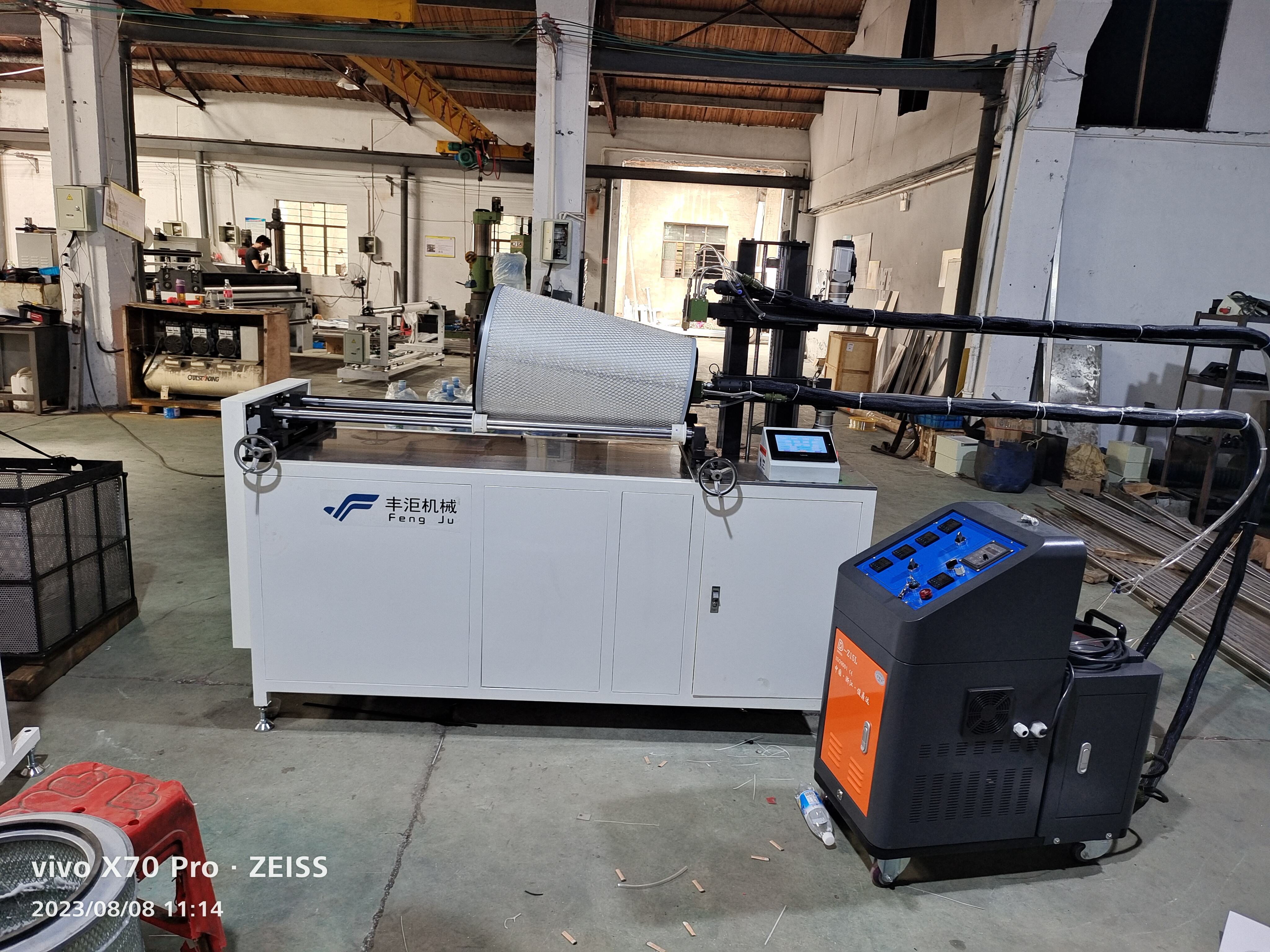
In the competitive landscape of industrial filtration manufacturing, the efficiency of your oil filter production line is one of the most critical determinants of profitability, product quality, and long-term operational sustainability. Manufacturers facing rising raw material costs, tighter delivery timelines, and increasingly demanding quality standards cannot afford to operate a line that runs below its full potential. Efficiency improvements are not just about speed — they encompass yield rates, downtime reduction, energy consumption, and workforce productivity working in concert.
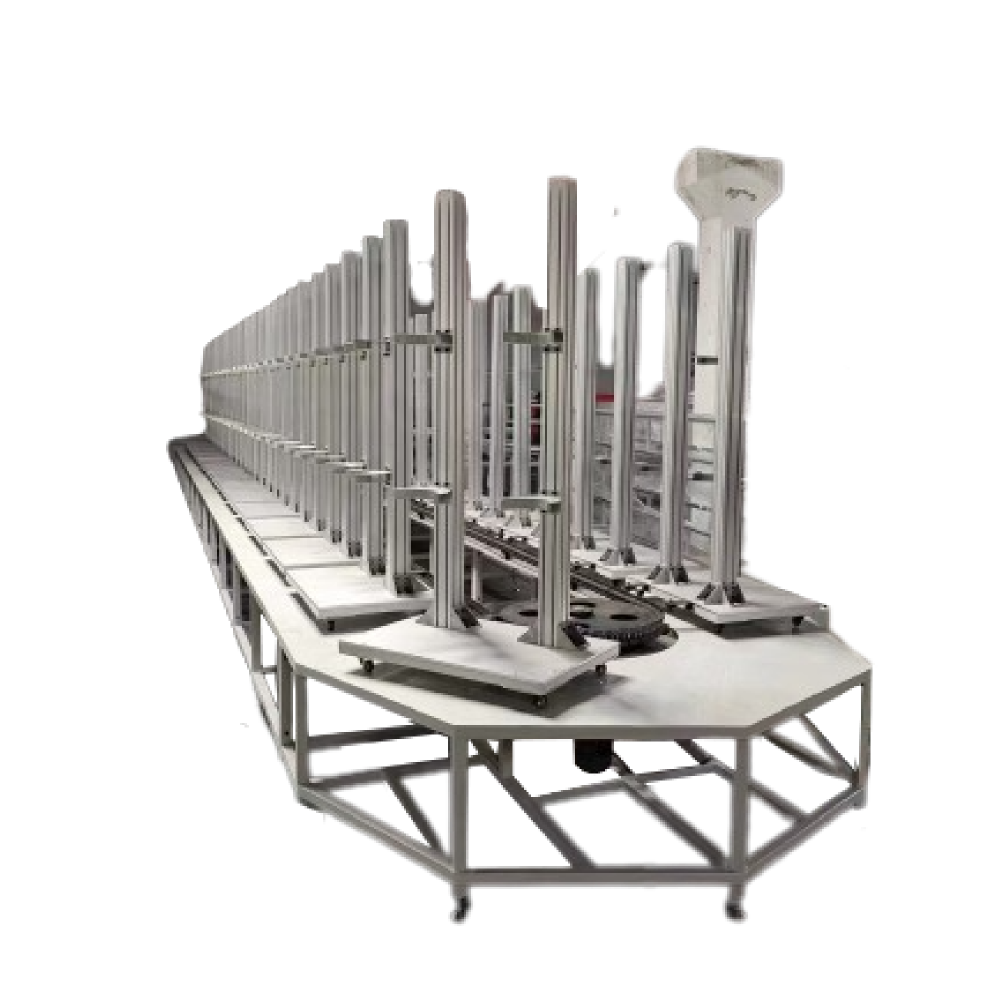
This guide is designed for production managers, plant engineers, and operations leaders who are actively seeking practical, implementable strategies to improve the output and reliability of their oil filter production line. Whether you are running a high-volume automated facility or a semi-automated mid-scale operation, the principles covered here — from process layout optimization to equipment calibration and real-time monitoring — apply directly to your environment. The goal is not theoretical; it is actionable improvement that measurably changes your line's performance metrics.
Understanding the Core Efficiency Bottlenecks in an Oil Filter Production Line
Identifying Where Production Time Is Actually Lost
Before any efficiency improvement can take hold, you must develop a clear and data-driven picture of where time and resources are being lost within your oil filter production line. Many manufacturers operate under assumptions rather than actual measurement, believing that a specific workstation or machine is the primary bottleneck when the real constraint lies elsewhere. Conducting a thorough time-study analysis across every stage — from filter media feeding and pleating to end-cap bonding, casing assembly, and final inspection — gives you the factual baseline you need.
In most oil filter production line configurations, common bottlenecks include inconsistent media feeding speeds, adhesive curing time delays, manual inspection stages, and poorly synchronized transfer mechanisms between stations. Each of these introduces micro-stoppages that compound into significant production losses over a single shift. Understanding the actual cycle time versus the theoretical cycle time at each station allows your engineering team to prioritize improvements with the highest return on investment.
Tracking Overall Equipment Effectiveness, commonly referred to as OEE, is the industry-standard method for quantifying these losses. OEE combines availability, performance rate, and quality rate into a single composite metric. A world-class oil filter production line typically targets OEE values above 85%, while many facilities operate in the 55% to 70% range — indicating substantial room for improvement without capital expenditure on new equipment.
Recognizing the Impact of Poor Material Flow
Material flow within an oil filter production line directly affects throughput and labor efficiency. When raw materials such as filter paper rolls, end caps, center tubes, and outer casings are not positioned optimally relative to the machines that process them, workers spend excessive time on non-value-adding transport activities. This is a form of waste that Lean Manufacturing methodologies identify as 'transportation loss,' and it is surprisingly prevalent even in relatively modern plants.
A well-designed material flow strategy ensures that each component arrives at its processing station at precisely the right time and in the right quantity. For the oil filter production line, this means synchronizing supplier deliveries with production scheduling, organizing in-line buffers to absorb minor variation without starving downstream stations, and using physical layout analysis — such as spaghetti diagrams — to identify excessive material travel distances.
Even small reductions in material travel distance can translate into significant throughput gains when applied consistently across a full production shift. A 10% reduction in average inter-station travel time across a ten-station oil filter production line can increase net output by several percentage points without any change to machine speed or staffing levels.
Equipment Maintenance and Calibration Strategies That Drive Performance
Implementing Preventive Maintenance Protocols
Unplanned downtime is one of the most destructive forces acting against the efficiency of any oil filter production line. When a pleating machine, adhesive dispenser, or assembly press fails unexpectedly mid-shift, the ripple effects extend far beyond the repair time itself. Upstream stations build excess inventory, downstream stations run idle, and the entire rhythm of the line is disrupted. Restoring stable production after an unplanned stoppage often takes significantly longer than the repair itself, because restarting synchronized processes requires recalibration and quality verification.
Preventive maintenance — scheduled, systematic servicing of equipment before failure occurs — is the most direct countermeasure. For an oil filter production line, this means establishing equipment-specific maintenance intervals based on manufacturer recommendations and actual operating history, training machine operators to recognize early warning signs such as unusual vibration, adhesive flow irregularities, or increased cycle times, and ensuring that critical spare parts are stocked on-site to minimize repair duration when components do wear out.
Modern Computerized Maintenance Management Systems, known as CMMS platforms, allow production teams to schedule, track, and document all maintenance activities. This creates a historical record that enables data-driven decisions about component replacement cycles and identifies patterns in failure modes that can be addressed proactively. Plants that shift from reactive to preventive maintenance on their oil filter production line consistently report OEE improvements of 8% to 15% within the first year.
Precision Calibration of Adhesive and Sealing Systems
The adhesive bonding and end-cap sealing stages within an oil filter production line are among the most quality-sensitive and efficiency-critical operations in the entire process. Inconsistent adhesive temperature, incorrect dispensing volumes, or misaligned sealing fixtures cause high rates of rework and scrap — both of which consume time, labor, and materials without producing sellable output. Precision calibration of these systems is therefore a high-leverage efficiency intervention.
Adhesive systems should be calibrated at regular intervals — typically at the start of each shift and after any machine stoppage — to verify that temperature set points, pump pressures, and nozzle alignment remain within defined tolerances. For polyurethane and hot-melt adhesive systems commonly used on oil filter production lines, even small deviations in dispensing temperature can alter viscosity significantly, resulting in incomplete bonds or excessive adhesive bleed that contaminates sealing surfaces.
Sealing press alignment should be verified using calibrated gauges, and fixture wear should be tracked systematically. Worn fixtures produce seals that are geometrically inconsistent, increasing leak failure rates in end-of-line pressure testing. Consistent calibration practices reduce the scrap rate at the sealing stage, which directly improves the overall yield of the oil filter production line and reduces the cost per good unit produced.
Automation and Technology Integration for Higher Throughput
Strategic Automation of High-Repetition Manual Tasks
Automation within an oil filter production line should be approached strategically rather than comprehensively. Full automation of every stage is not always economically justified, particularly for manufacturers producing a wide variety of filter specifications in relatively small batch sizes. However, targeted automation of high-repetition, ergonomically demanding, or quality-sensitive manual tasks consistently delivers strong returns on investment.
Tasks that are strong candidates for automation on an oil filter production line include filter media pleating and counting, end-cap placement and pressing, center tube insertion, and packaging. These operations require consistent force application, precise dimensional placement, and high cycle rates — qualities that manual labor cannot sustain reliably across full production shifts. Automated systems perform these tasks at constant speed with minimal variation, which simultaneously increases throughput and improves product consistency.
When evaluating automation investments, the analysis should account for not only the direct labor savings but also the quality improvement value — quantified as the cost of scrap and rework that will be eliminated. In many oil filter production line environments, the reduction in defect rates alone can justify a significant portion of the automation investment, independent of the productivity gains.
Real-Time Production Monitoring and Data Analytics
Modern oil filter production lines benefit enormously from real-time production monitoring systems that capture machine performance data, output counts, reject rates, and downtime events as they occur. This visibility allows supervisors and engineers to respond to emerging problems before they escalate into major production losses. Rather than discovering at end-of-shift that output was 15% below target, a monitored line alerts the team the moment a station falls below its expected cycle rate.
Sensors placed at key points along the oil filter production line — monitoring conveyor speeds, pleat counts, adhesive flow rates, and assembly press forces — feed data into a centralized dashboard that provides a real-time picture of line health. Anomalies trigger alerts that direct operator attention precisely where it is needed, rather than requiring constant physical patrol of the entire line.
Over time, the accumulated production data becomes an invaluable analytical resource. Trend analysis reveals gradual performance degradation in specific machines before it reaches a level that causes visible quality problems. Shift-by-shift performance comparisons identify best practices from high-performing operators that can be standardized across the entire team. For an oil filter production line, this data-driven culture of continuous improvement is the foundation of sustained efficiency gains.
Workforce Training and Standardized Work Procedures
Developing Operator Competency for Complex Line Tasks
Even the most technically advanced oil filter production line depends on skilled, knowledgeable operators to perform at its full potential. Machine setup, quality inspection, minor fault clearing, and changeover execution all require a level of competency that cannot be assumed — it must be deliberately built through structured training programs. Operators who do not fully understand the equipment they manage are slower to set up, more likely to make errors during changeovers, and less capable of identifying early-stage quality deviations.
Training programs for oil filter production line operators should cover both the mechanical function of each machine and the quality parameters each station is responsible for controlling. An operator who understands why pleat spacing tolerance matters to filter performance is more motivated to maintain it precisely than one who simply follows instructions without context. This deeper understanding also enables operators to notice and report anomalies that might otherwise be overlooked until they become serious defects.
Cross-training is another valuable strategy. When operators are qualified to work effectively at multiple stations on the oil filter production line, supervisors have greater flexibility to balance the line in response to absenteeism, varying order mixes, or localized bottlenecks. This operational flexibility is a practical efficiency advantage that pays dividends daily.
Standardized Work as the Foundation of Consistent Output
Standardized work — the documented, agreed-upon sequence and method for performing each task on the oil filter production line — is one of the most powerful and underutilized efficiency tools available to manufacturers. When every operator performs tasks in the same way, using the same sequence and the same tools, output becomes predictable and quality becomes consistent. Variation in method is one of the primary drivers of quality variation, which translates directly into rework costs and throughput instability.
Creating effective standardized work documentation for an oil filter production line requires capturing the current best-known method for each task, including setup procedures, quality check points, and common fault responses. This documentation should be visual, concise, and physically posted at each workstation rather than stored in a binder in the supervisor's office. Regular audits verify adherence and identify where the standard itself may need updating as process improvements are implemented.
Standardized work also significantly reduces the time and effort required to train new operators. When a clear, validated method is already documented, onboarding becomes a process of teaching the standard rather than allowing each new employee to develop their own approach through trial and error. This accelerates the time to productivity for new hires on the oil filter production line and reduces the quality risk associated with workforce turnover.
FAQ
What is the most impactful first step to improve efficiency on an oil filter production line?
The most impactful first step is conducting a rigorous baseline assessment using OEE measurement across all stations on the oil filter production line. Without objective data on where availability, performance, and quality losses are occurring, improvement efforts risk being directed at symptoms rather than root causes. Establishing this baseline allows your team to prioritize interventions by potential impact and track whether changes are delivering measurable results.
How does preventive maintenance specifically benefit an oil filter production line?
Preventive maintenance eliminates the unplanned stoppages that disrupt the synchronized flow of an oil filter production line. By servicing machines before they fail, production teams avoid the cascading losses caused by mid-shift breakdowns, which include idle downstream stations, scrapped in-process inventory, and extended restart periods. Over a full operating year, the reduction in unplanned downtime alone typically justifies the labor and parts cost of a structured preventive maintenance program.
Is full automation necessary to significantly improve oil filter production line efficiency?
Full automation is not a prerequisite for significant efficiency improvements on an oil filter production line. Targeted automation of the highest-repetition or quality-sensitive manual tasks — combined with real-time monitoring, preventive maintenance, and standardized work — frequently delivers efficiency gains of 20% to 30% or more at a fraction of the cost of full-line automation. A phased, strategic approach to automation ensures that each investment is justified by measurable performance improvement.
How does real-time monitoring improve quality outcomes on an oil filter production line?
Real-time monitoring enables early detection of process deviations before they generate a significant volume of defective product. On an oil filter production line, a sensor detecting an adhesive temperature drift or pleat-count irregularity can trigger an alert within seconds, allowing operators to intervene before hundreds of units are produced outside specification. This dramatically reduces end-of-line rejection rates and rework costs, improving both the yield and the cost efficiency of the line.
Table of Contents
- Understanding the Core Efficiency Bottlenecks in an Oil Filter Production Line
- Equipment Maintenance and Calibration Strategies That Drive Performance
- Automation and Technology Integration for Higher Throughput
- Workforce Training and Standardized Work Procedures
-
FAQ
- What is the most impactful first step to improve efficiency on an oil filter production line?
- How does preventive maintenance specifically benefit an oil filter production line?
- Is full automation necessary to significantly improve oil filter production line efficiency?
- How does real-time monitoring improve quality outcomes on an oil filter production line?