
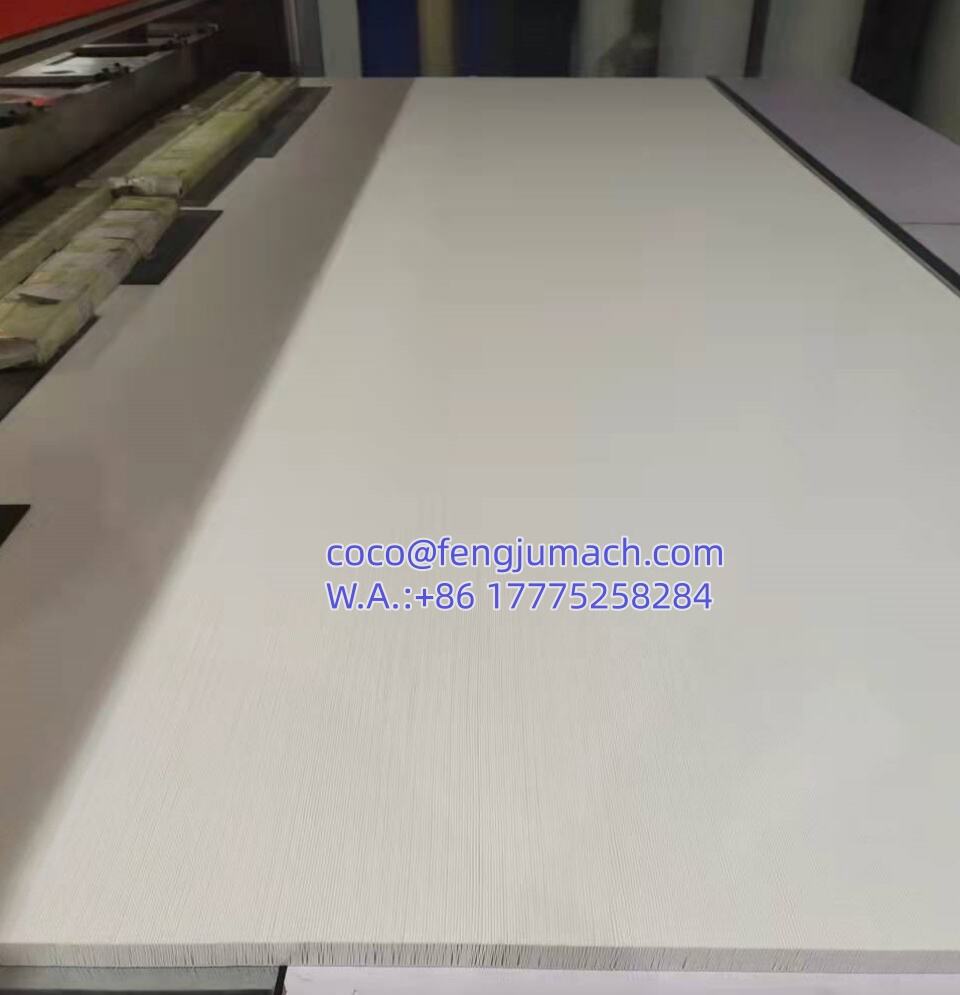
Manufacturing industries increasingly rely on advanced machinery to achieve consistent product quality and operational efficiency. The paper pleating machine has become an essential tool for producing uniform pleats in various applications, from automotive air filters to industrial filtration systems. Understanding how to optimize these machines ensures maximum productivity, reduces material waste, and maintains the high-quality standards that modern manufacturing demands. Proper optimization techniques can significantly impact your production line's overall performance and profitability.
Understanding Machine Components and Their Impact on Pleat Quality
Critical Mechanical Elements
The foundation of optimal pleat quality begins with understanding the mechanical components that directly influence the pleating process. The forming wheel represents the heart of any paper pleating machine, where precise geometry and surface finish determine pleat uniformity. Regular inspection of the forming wheel for wear patterns, surface roughness, and dimensional accuracy ensures consistent pleat formation. Additionally, the pressure rollers must maintain proper alignment and consistent pressure distribution across the entire width of the material being processed.
Tension control systems play a crucial role in maintaining material stability during the pleating process. Improper tension can result in irregular pleat spacing, material wrinkles, or even tearing during high-speed operation. The feed mechanism must deliver material at a constant rate while maintaining appropriate tension levels. Modern machines often incorporate servo-driven tension control systems that provide real-time adjustments based on material characteristics and processing speed.
Cutting and Finishing Components
The cutting mechanism's precision directly affects the final product's quality and dimensional consistency. Sharp, properly aligned cutting blades ensure clean edges without fraying or deformation of the pleated material. Regular blade maintenance, including sharpening and replacement schedules, prevents quality degradation over time. The cutting timing must synchronize perfectly with the pleating cycle to achieve consistent pleat-to-pleat dimensions.
Heat sealing elements, when applicable, require careful temperature control and uniform heat distribution. Inconsistent sealing can compromise product integrity and lead to premature failure in the final application. Temperature sensors and feedback systems help maintain optimal sealing conditions across varying production speeds and environmental conditions.
Material Preparation and Selection Strategies
Paper Grade and Thickness Considerations
Material selection significantly impacts the performance of your paper pleating machine and the quality of the finished product. Different paper grades exhibit varying folding characteristics, tensile strength, and dimensional stability. High-quality filter papers with consistent basis weight and moisture content provide the most predictable pleating results. The material thickness must match the machine's design specifications to ensure proper pleat formation without excessive stress on mechanical components.
Moisture content control represents a critical factor often overlooked in machine optimization. Papers with excessive moisture may exhibit poor fold retention and increased tear susceptibility during processing. Conversely, overly dry materials can become brittle and prone to cracking at fold lines. Maintaining optimal moisture levels through proper storage conditions and environmental control ensures consistent material behavior throughout the production run.
Surface Treatment and Conditioning
Pre-treatment processes can significantly enhance material performance in pleating applications. Electrostatic treatment or surface conditioning can improve material handling characteristics and reduce static buildup during high-speed processing. Some applications benefit from anti-static coatings that prevent material adhesion to machine components and reduce dust accumulation on finished products.
Material conditioning chambers allow papers to acclimate to processing environment conditions before entering the pleating zone. This practice minimizes dimensional changes during processing and helps maintain consistent pleat geometry throughout production runs. Temperature and humidity control within conditioning areas should match the primary processing environment.
Process Parameter Optimization Techniques
Speed and Feed Rate Calibration
Achieving optimal production speeds while maintaining quality requires careful calibration of feed rates and processing speeds. The relationship between material feed rate and forming wheel rotation speed determines pleat pitch accuracy and consistency. Higher speeds may increase productivity but can compromise quality if mechanical tolerances and material handling capabilities are exceeded. Systematic speed optimization involves gradual increases while monitoring quality parameters and machine performance indicators.
Variable speed drives provide flexibility in accommodating different material types and pleat specifications within the same production run. Modern paper pleating machine systems incorporate programmable controllers that can store multiple speed profiles for different product configurations. This capability reduces setup time and ensures consistent processing parameters for repeat orders.
Pressure and Force Distribution
Uniform pressure distribution across the pleating zone ensures consistent fold formation and prevents material damage. Pressure monitoring systems provide real-time feedback on force distribution and can alert operators to variations that might indicate worn components or misalignment issues. Pneumatic pressure systems offer precise control and quick adjustment capabilities for different material thicknesses and processing requirements.
Force profiling techniques help identify optimal pressure settings for specific material combinations and product requirements. Excessive pressure can cause material compression and poor fold definition, while insufficient pressure results in weak folds that may not maintain their shape over time. Systematic pressure optimization involves testing different force levels while measuring fold strength and dimensional stability.
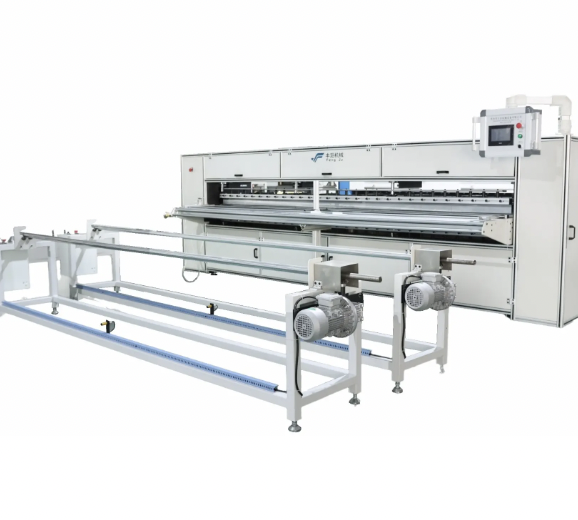
Quality Control and Monitoring Systems
Real-Time Measurement Technologies
Modern quality control systems integrate multiple measurement technologies to monitor pleat consistency during production. Optical measurement systems can detect variations in pleat spacing, depth, and angle in real-time, allowing for immediate process adjustments. Laser-based measurement tools provide high-precision dimensional data that can be used for statistical process control and trend analysis.
Vision systems equipped with high-resolution cameras can identify surface defects, material tears, and fold irregularities that might not be detected through dimensional measurements alone. These systems can trigger automatic rejection mechanisms or process adjustments based on predetermined quality criteria. Integration with machine control systems enables closed-loop quality control that maintains consistent output with minimal operator intervention.
Statistical Process Control Implementation
Statistical process control techniques provide powerful tools for maintaining consistent quality while identifying trends that might indicate developing problems. Control charts for critical dimensions such as pleat pitch, depth, and material tension help operators distinguish between normal process variation and significant quality issues. Regular sampling and measurement protocols ensure adequate data collection for meaningful statistical analysis.
Process capability studies help establish realistic quality expectations and identify areas for improvement. These studies compare actual process performance against specification requirements and highlight opportunities for optimization. Capability indices provide quantitative measures of process performance that can be used for supplier qualification and customer quality reporting.
Preventive Maintenance and Troubleshooting
Scheduled Maintenance Protocols
Comprehensive preventive maintenance programs ensure consistent machine performance and minimize unexpected downtime. Regular lubrication schedules for all moving components prevent premature wear and maintain smooth operation. Bearing replacement intervals should be based on operating hours and load conditions rather than arbitrary time periods. Proper lubrication selection considers operating temperatures, speeds, and environmental conditions.
Alignment checks and calibration procedures should be performed at regular intervals to maintain geometric accuracy. Laser alignment tools help verify parallelism and concentricity of critical components. Calibration of measurement systems and process controls ensures continued accuracy of quality monitoring systems. Documentation of all maintenance activities provides valuable data for optimizing maintenance intervals and identifying recurring issues.
Common Issue Resolution
Understanding common quality issues and their root causes enables rapid problem resolution and process optimization. Irregular pleat spacing often results from worn forming wheels, improper tension control, or feed rate variations. Systematic troubleshooting procedures help isolate the specific cause and implement appropriate corrective actions. Material handling problems frequently stem from static buildup, improper guide positioning, or contaminated surfaces.
Edge quality problems can indicate dull cutting blades, improper blade alignment, or excessive cutting forces. Regular blade inspection and replacement schedules prevent quality degradation and reduce the risk of material damage. Temperature-related issues in heat sealing applications often require calibration of heating elements and thermal sensors.
Advanced Optimization Strategies
Automation and Integration Technologies
Advanced automation systems provide opportunities for significant quality improvements and productivity gains. Programmable logic controllers can coordinate multiple machine functions and optimize processing parameters based on real-time feedback from quality monitoring systems. Integration with enterprise resource planning systems enables automatic adjustment of production parameters based on order specifications and material characteristics.
Artificial intelligence and machine learning algorithms can analyze historical production data to identify optimization opportunities and predict quality trends. These systems can automatically adjust process parameters to maintain optimal quality while maximizing throughput. Predictive maintenance algorithms help identify developing problems before they impact production quality or cause equipment failure.
Environmental Control Considerations
Environmental conditions significantly impact both machine performance and material behavior during pleating operations. Temperature control systems maintain consistent processing conditions and prevent thermal expansion effects that can affect dimensional accuracy. Humidity control prevents moisture-related material behavior changes and reduces static electricity buildup.
Air filtration systems protect sensitive machine components from contamination and prevent particle accumulation on finished products. Positive pressure environments can reduce contamination risks in critical applications such as medical device manufacturing. Vibration isolation systems minimize the impact of external disturbances on precision components and measurement systems.
FAQ
What factors most significantly impact pleat consistency in production
Material quality and consistency represent the primary factors affecting pleat uniformity, followed closely by machine component condition and process parameter stability. Paper moisture content, basis weight variations, and surface characteristics directly influence fold formation and retention. Regular monitoring of these material properties, combined with systematic machine maintenance and calibration, ensures consistent pleat quality across production runs.
How often should forming wheels be inspected and replaced
Forming wheel inspection should occur daily during production periods, with detailed dimensional checks performed weekly or after predetermined production volumes. Replacement intervals depend on material abrasiveness, production volume, and quality requirements, but typically range from 6 months to 2 years under normal operating conditions. Early detection of wear patterns through regular measurement prevents gradual quality degradation and allows for planned replacement scheduling.
What maintenance practices most effectively prevent quality issues
Preventive maintenance programs focusing on lubrication, alignment, and calibration provide the most effective quality protection. Daily cleaning and inspection routines identify developing problems before they impact production. Regular replacement of wear components such as cutting blades and sealing elements prevents gradual quality degradation. Systematic documentation of maintenance activities enables optimization of service intervals and identification of recurring issues.
How can production speed be increased without compromising quality
Speed optimization requires systematic evaluation of material handling capabilities, machine component tolerances, and quality monitoring systems. Gradual speed increases with continuous quality monitoring help identify the optimal balance between productivity and quality. Upgrading to higher-precision components, improving material preparation processes, and implementing advanced process control systems often enable significant speed increases while maintaining or improving quality levels.